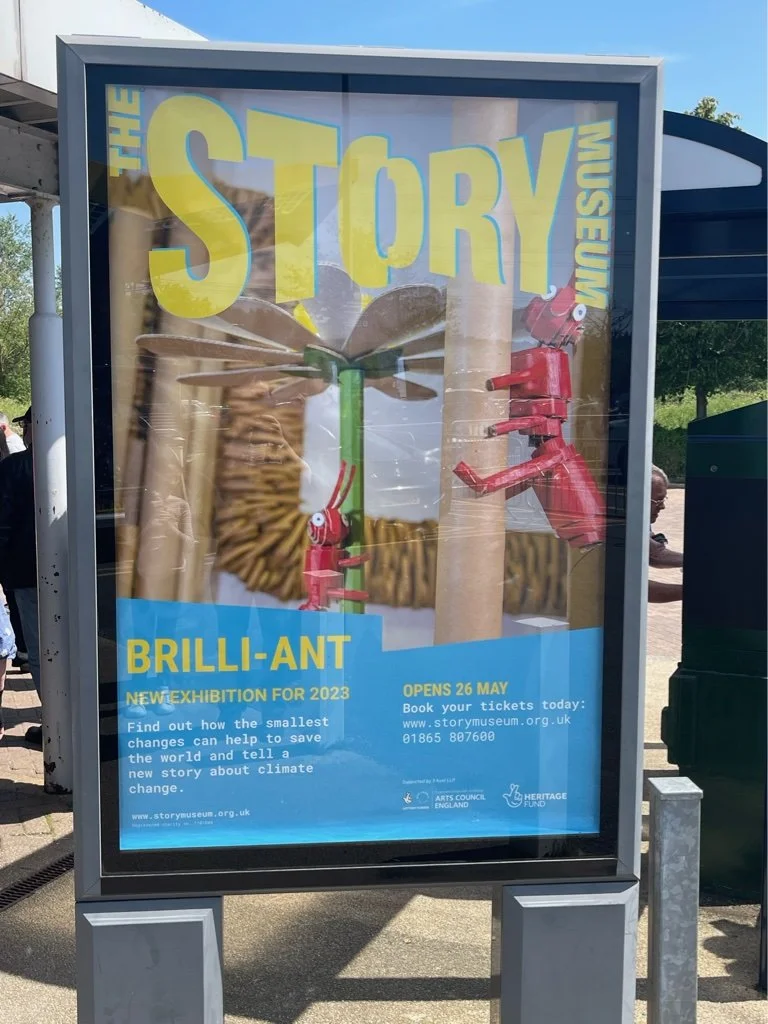
The Story Museum | Brilli-ant
Visual Story Telling | Exhibition Design | Creative Direction | Sculpture
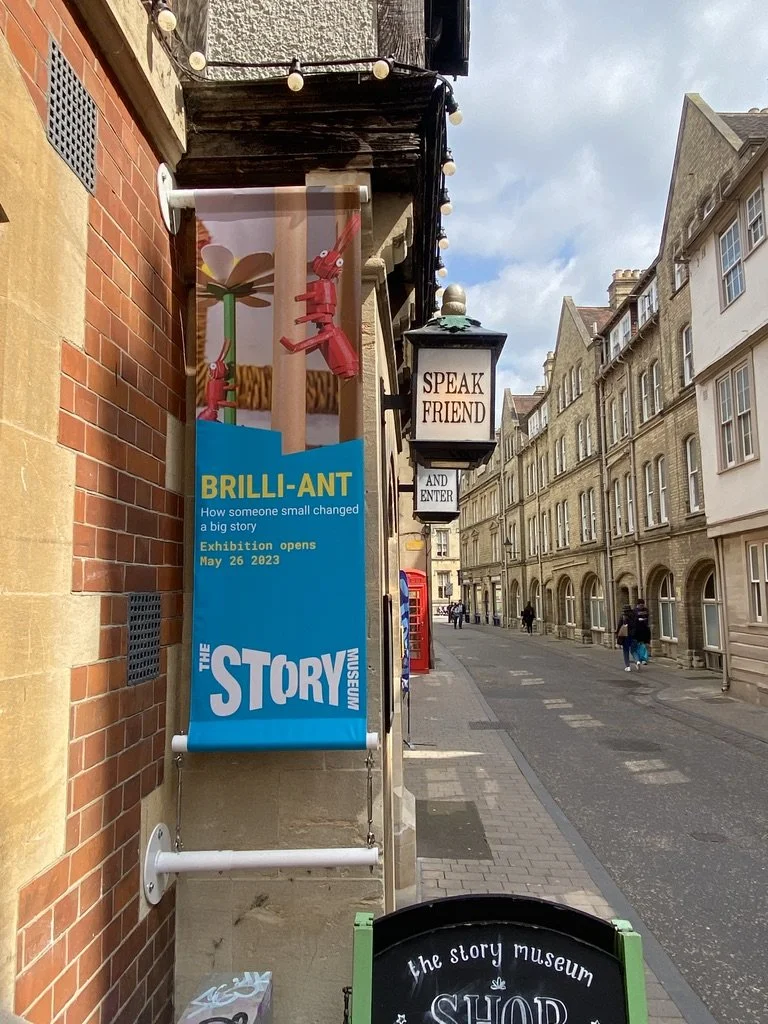
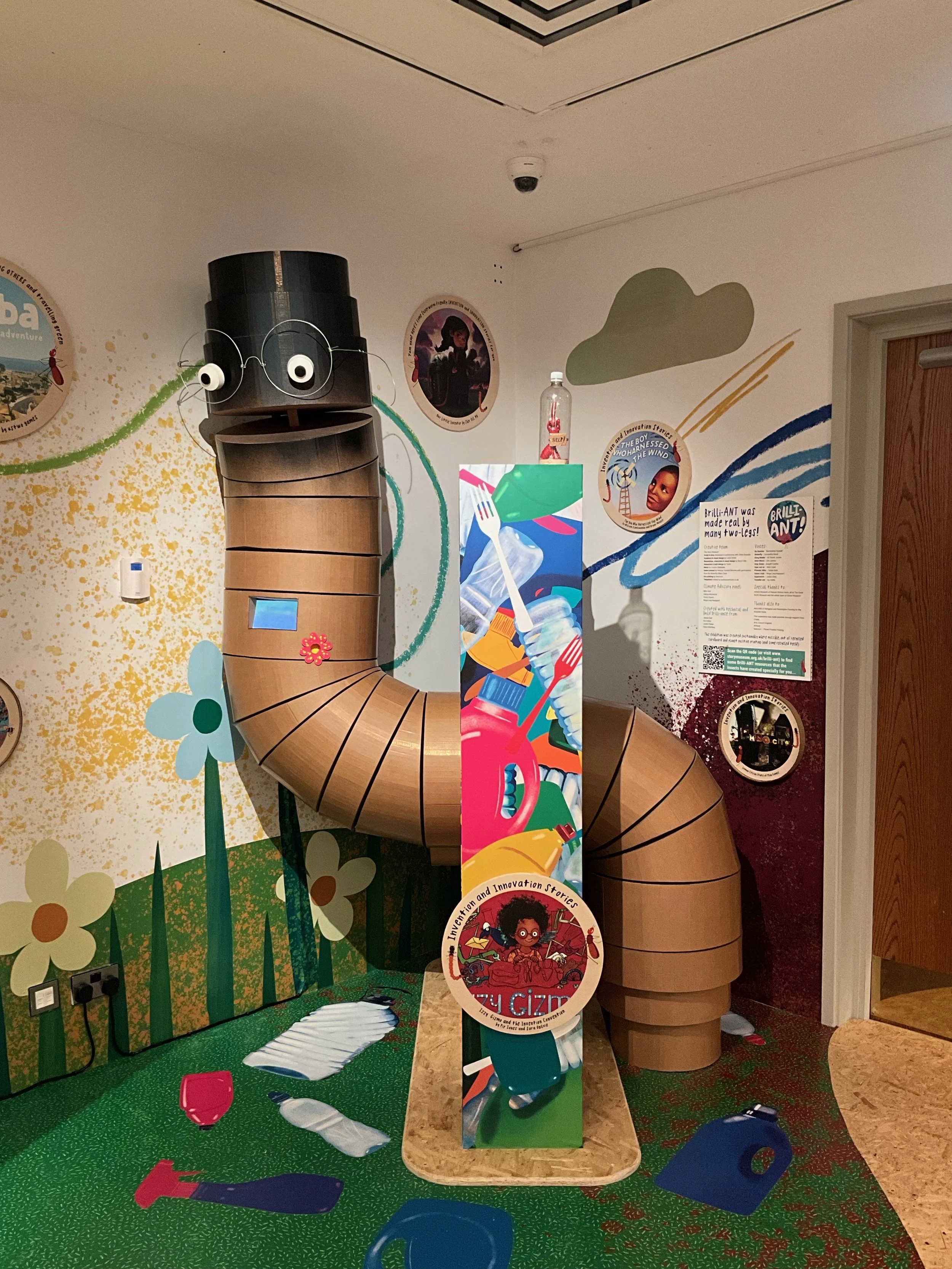
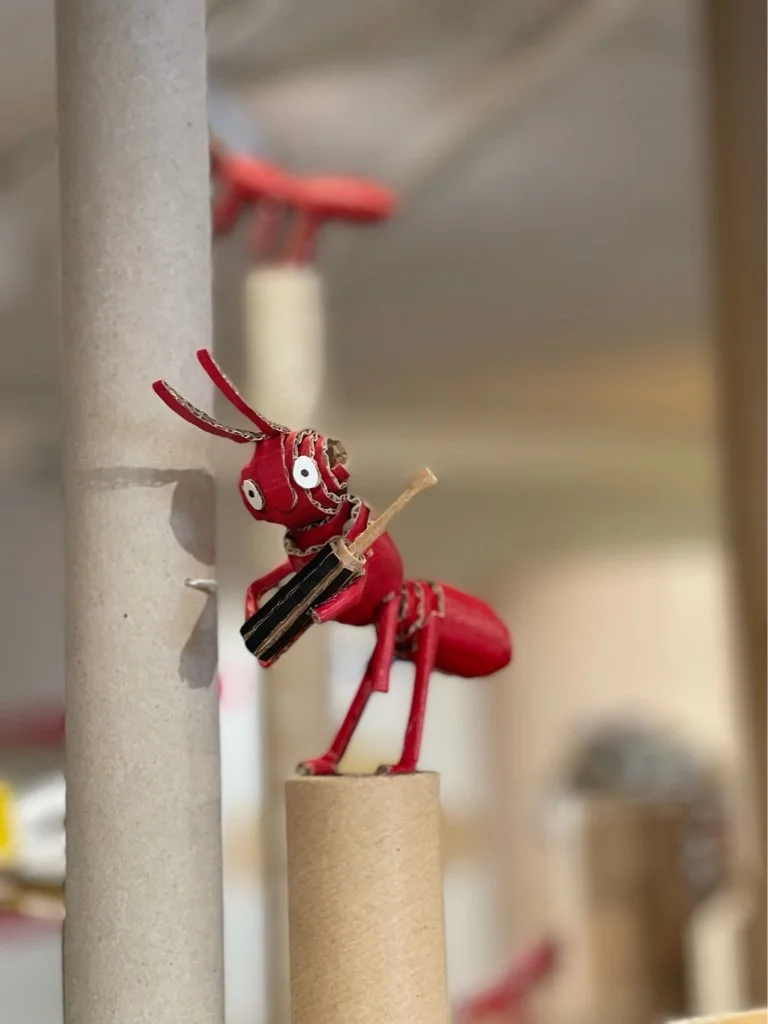
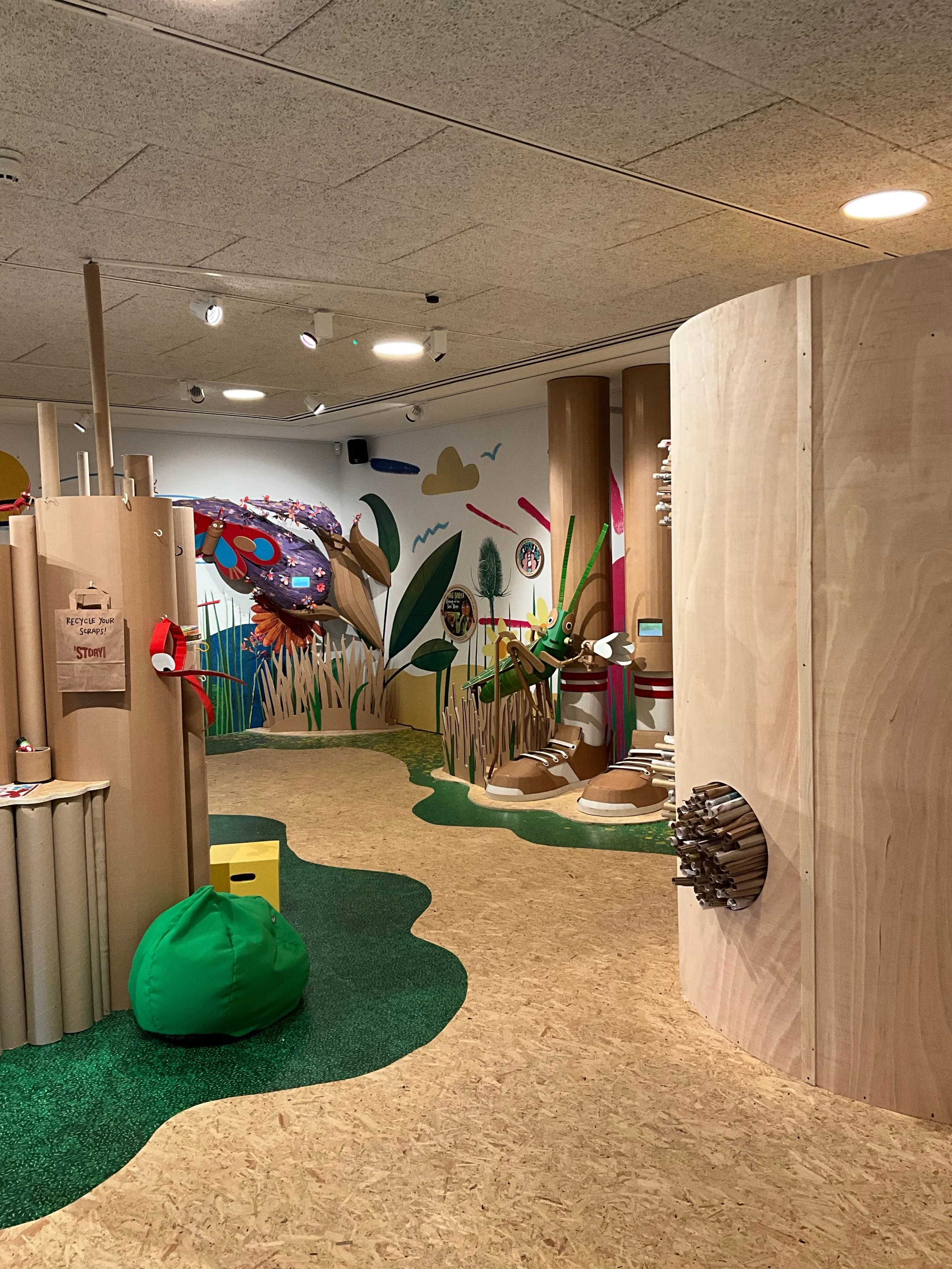
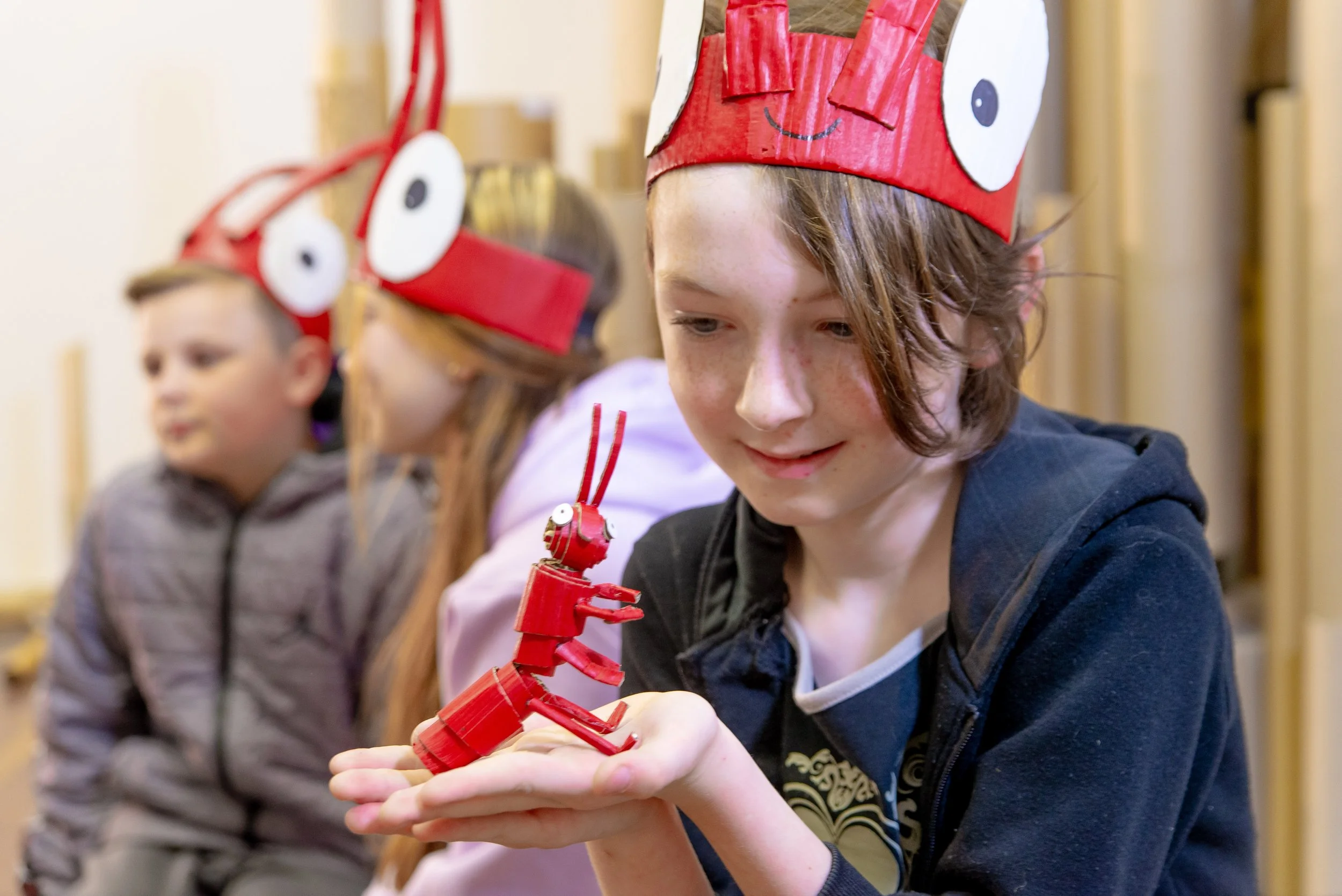
An interactive year long exhibition tackling the topic of climate change through story telling. Visitors donned a pair of antennae and entered into the world of insects. The antennae had sensors allowing them to trigger a story from each of the oversized insects in the exhibition.
”unapologetically positive” Barry Falls
The Story Museum is a children’s book museum in Oxford, UK.
Nominated for Sustainable Project of the Year at the 2024 Museums+Heritage Awards.

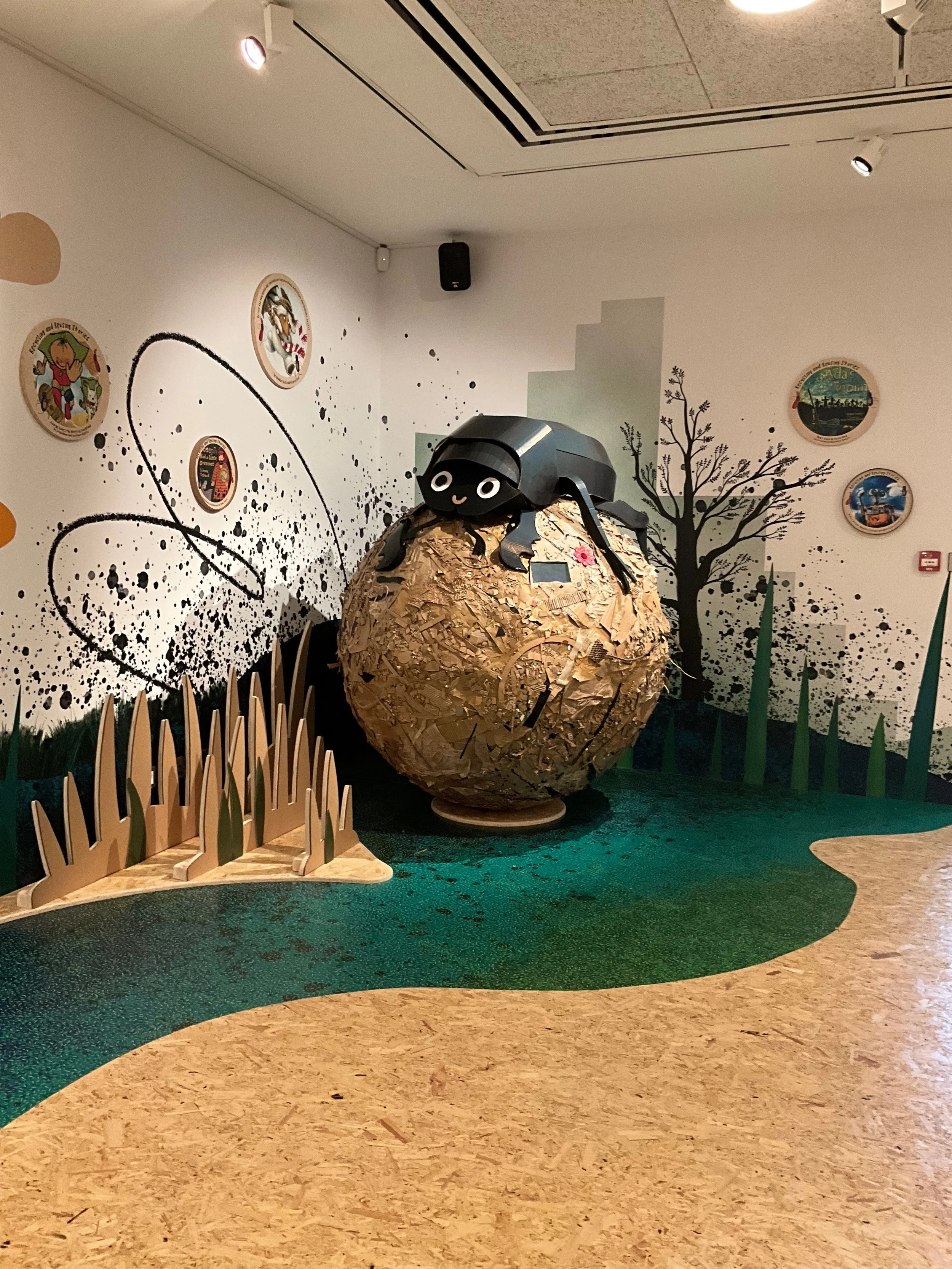
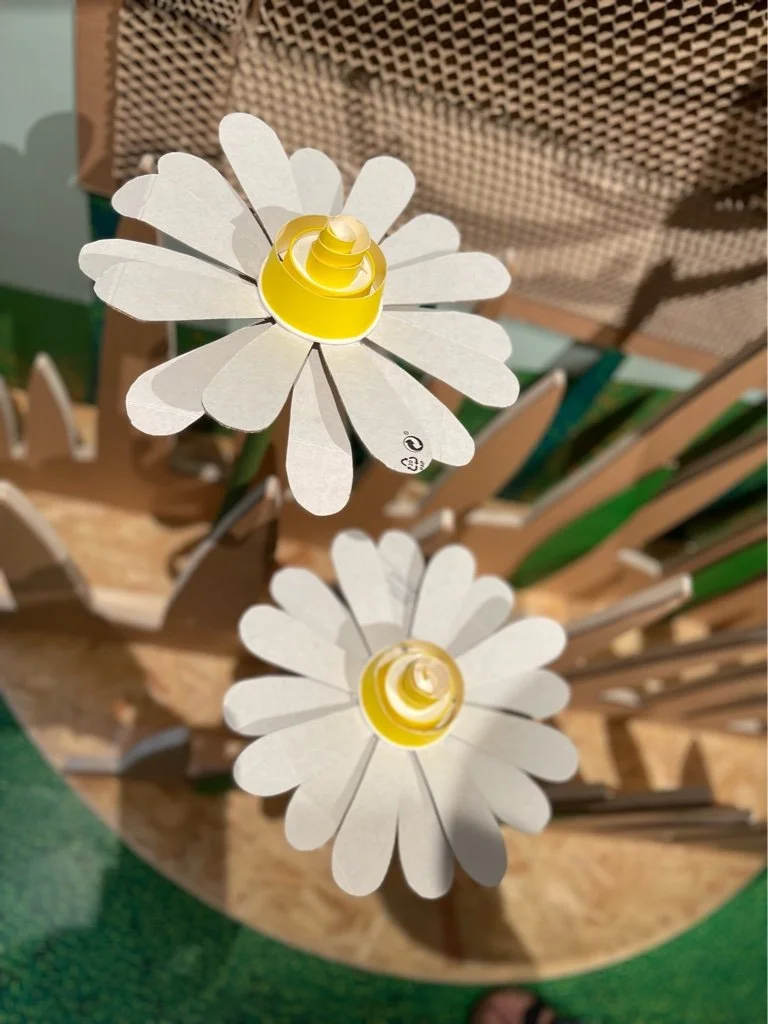
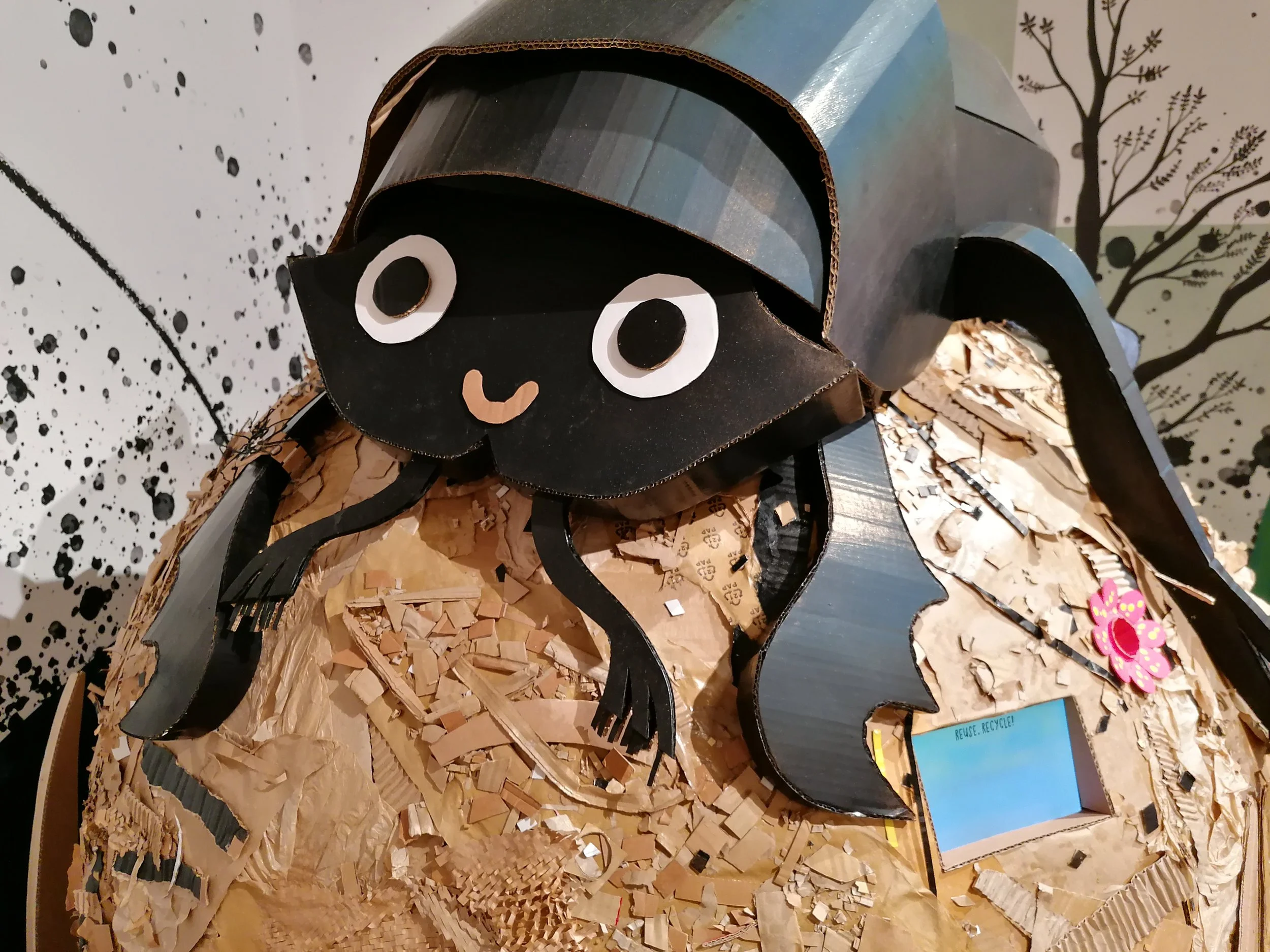
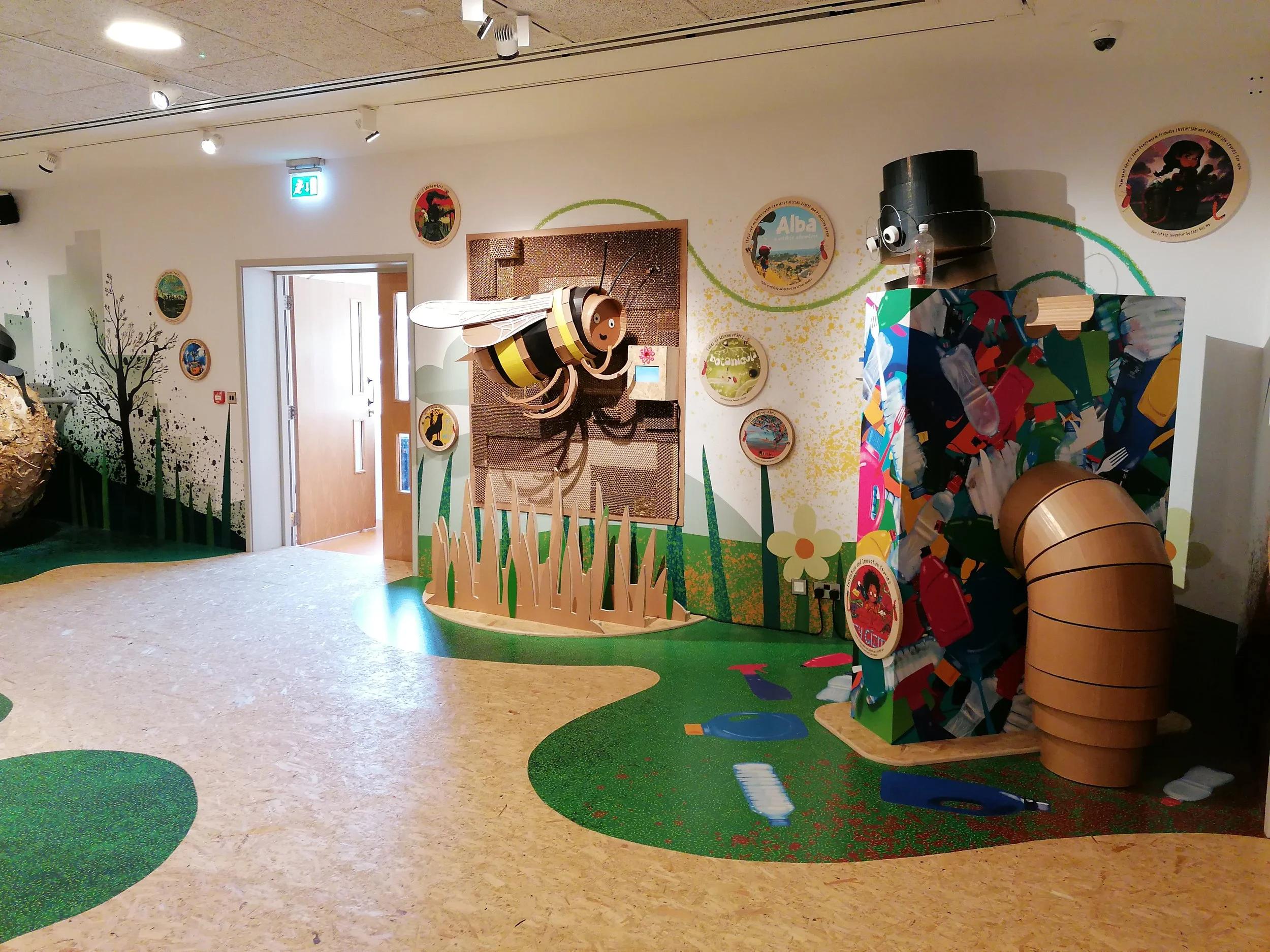
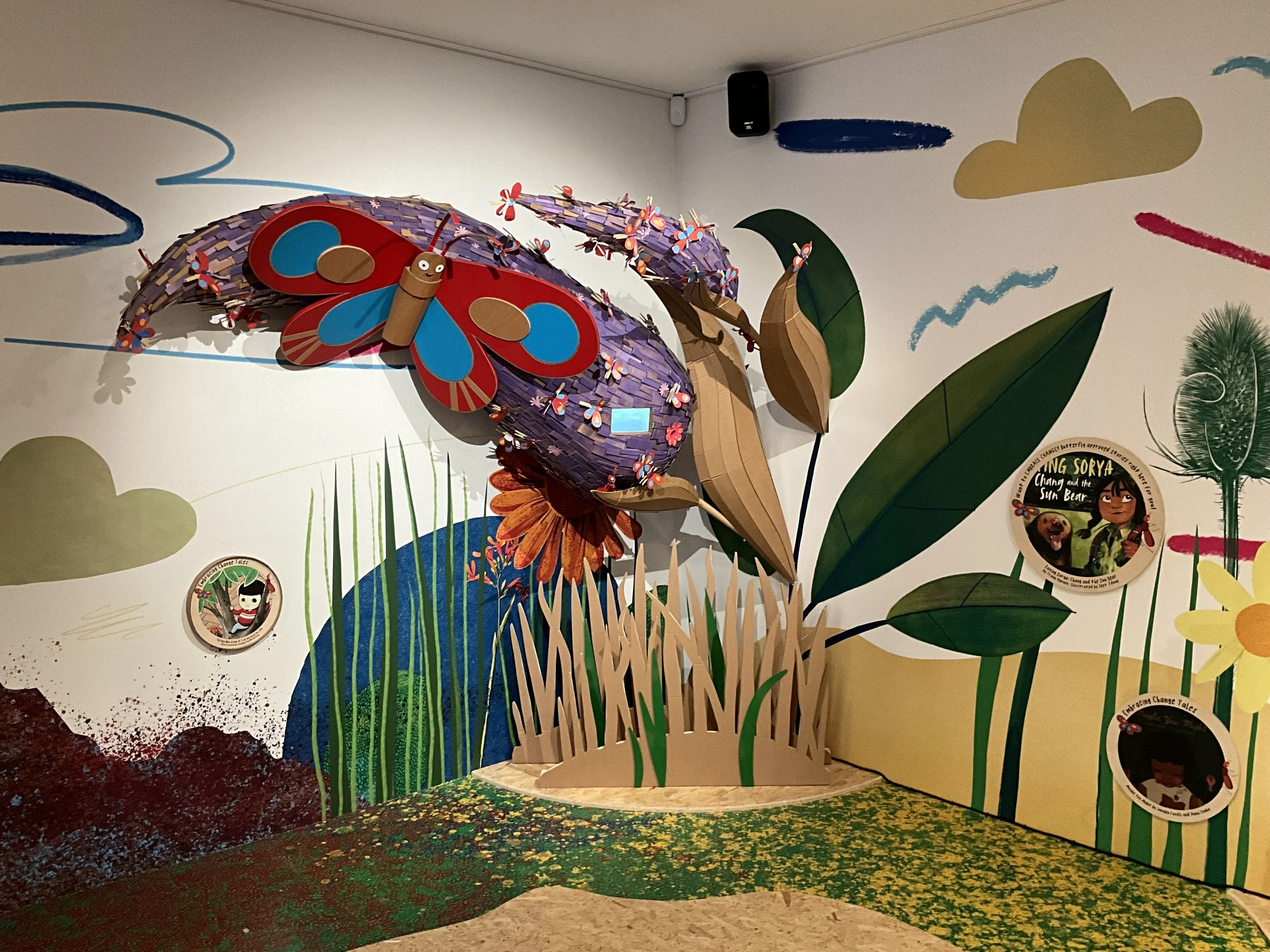
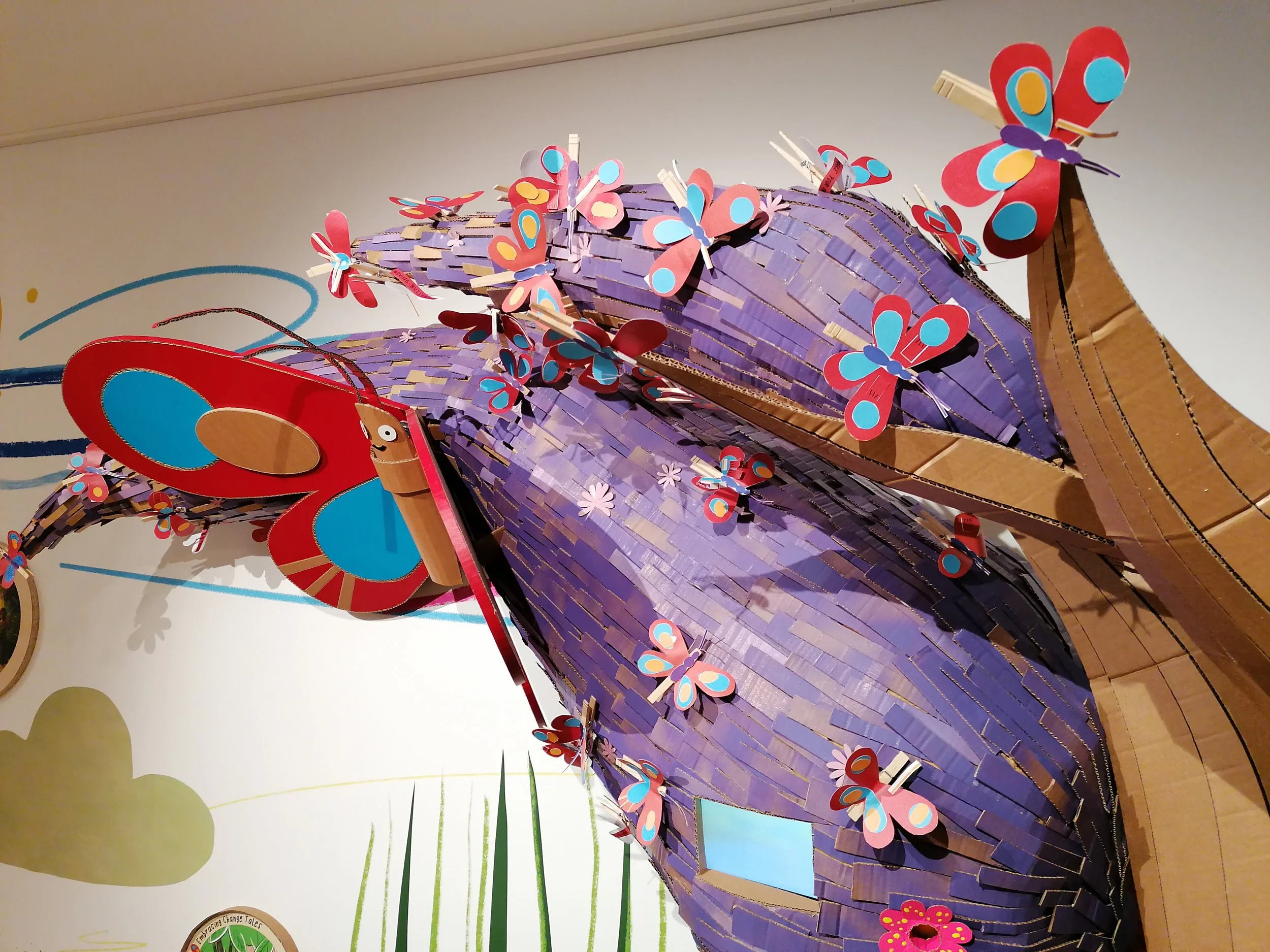
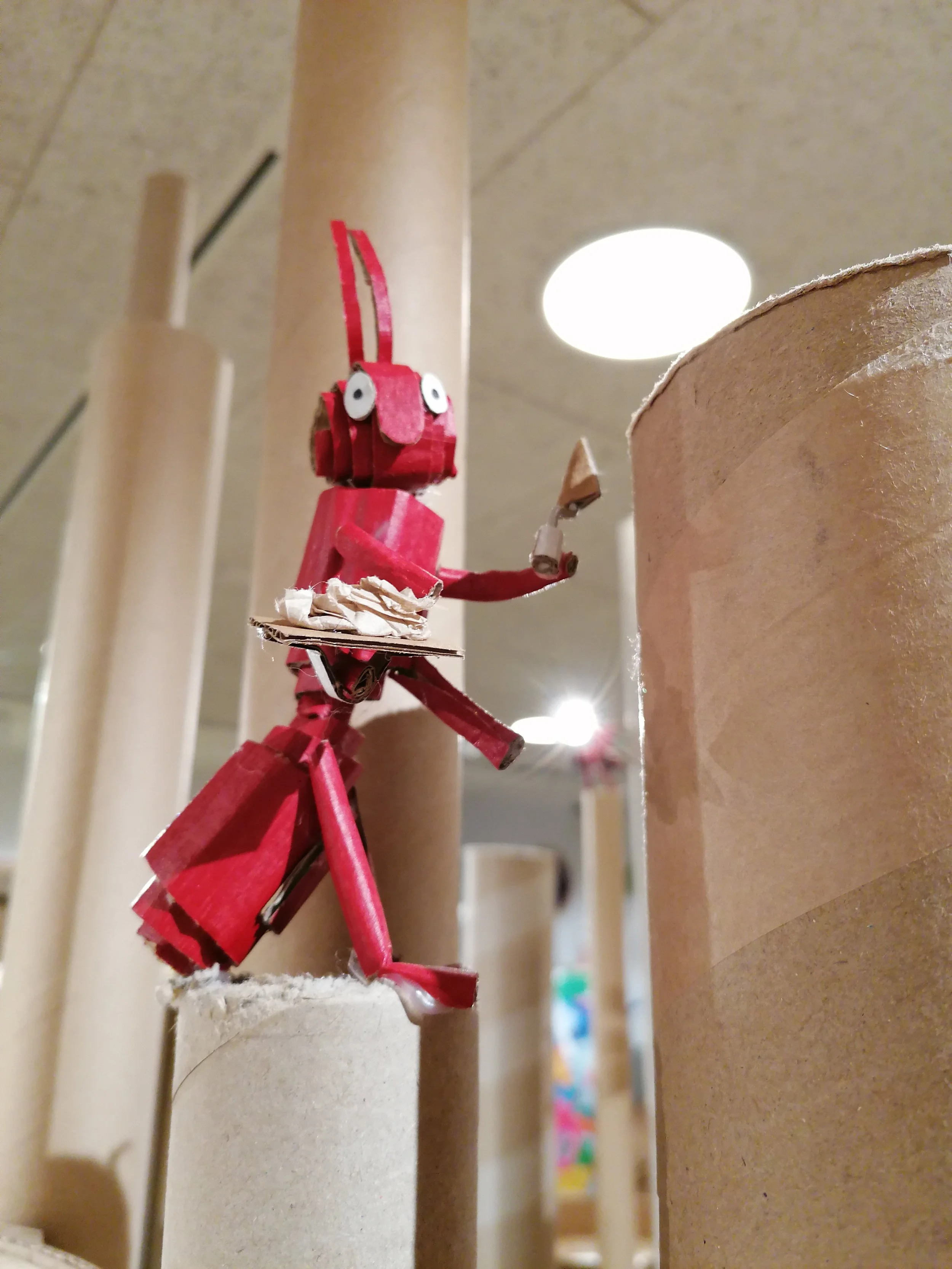
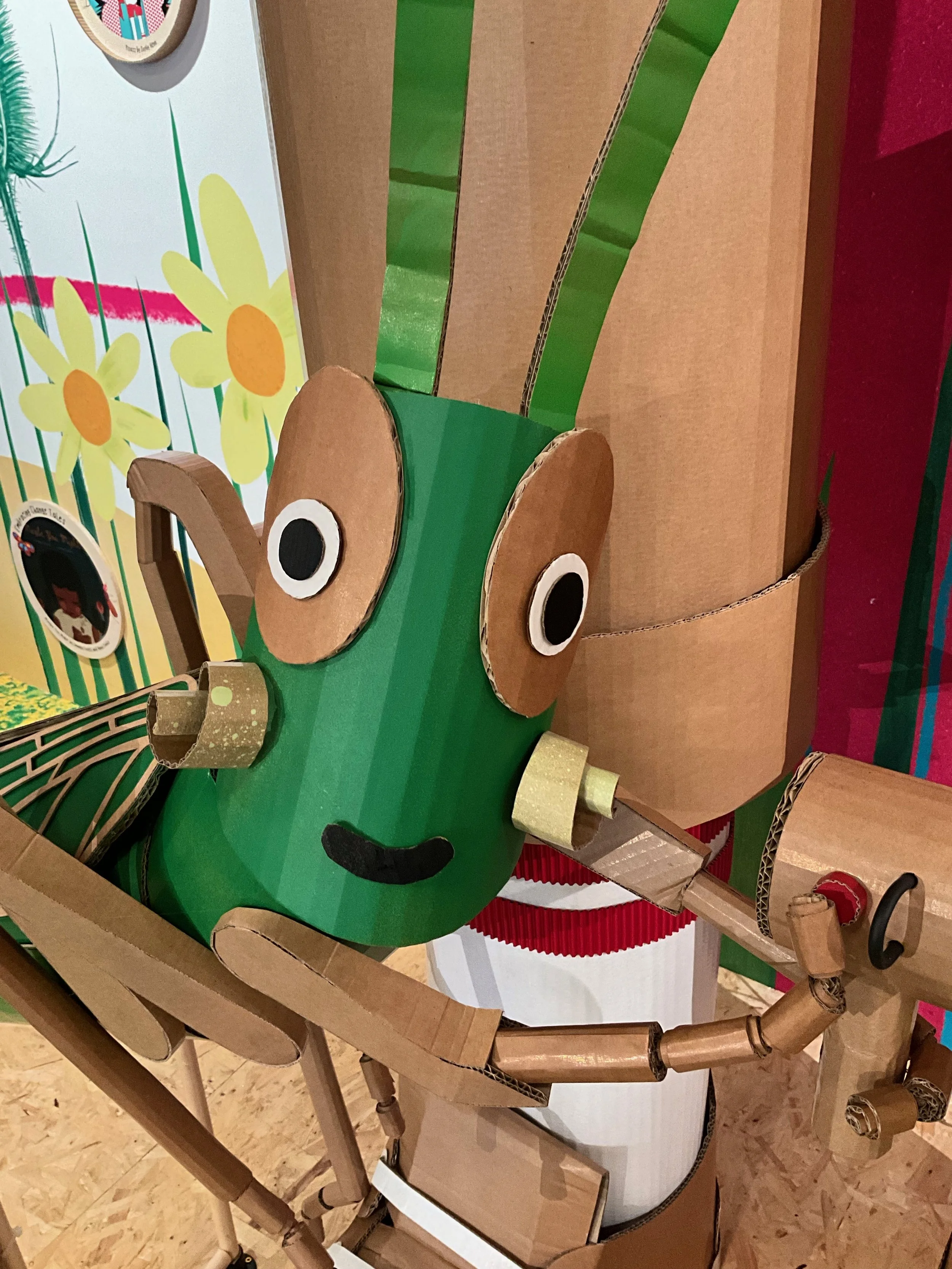
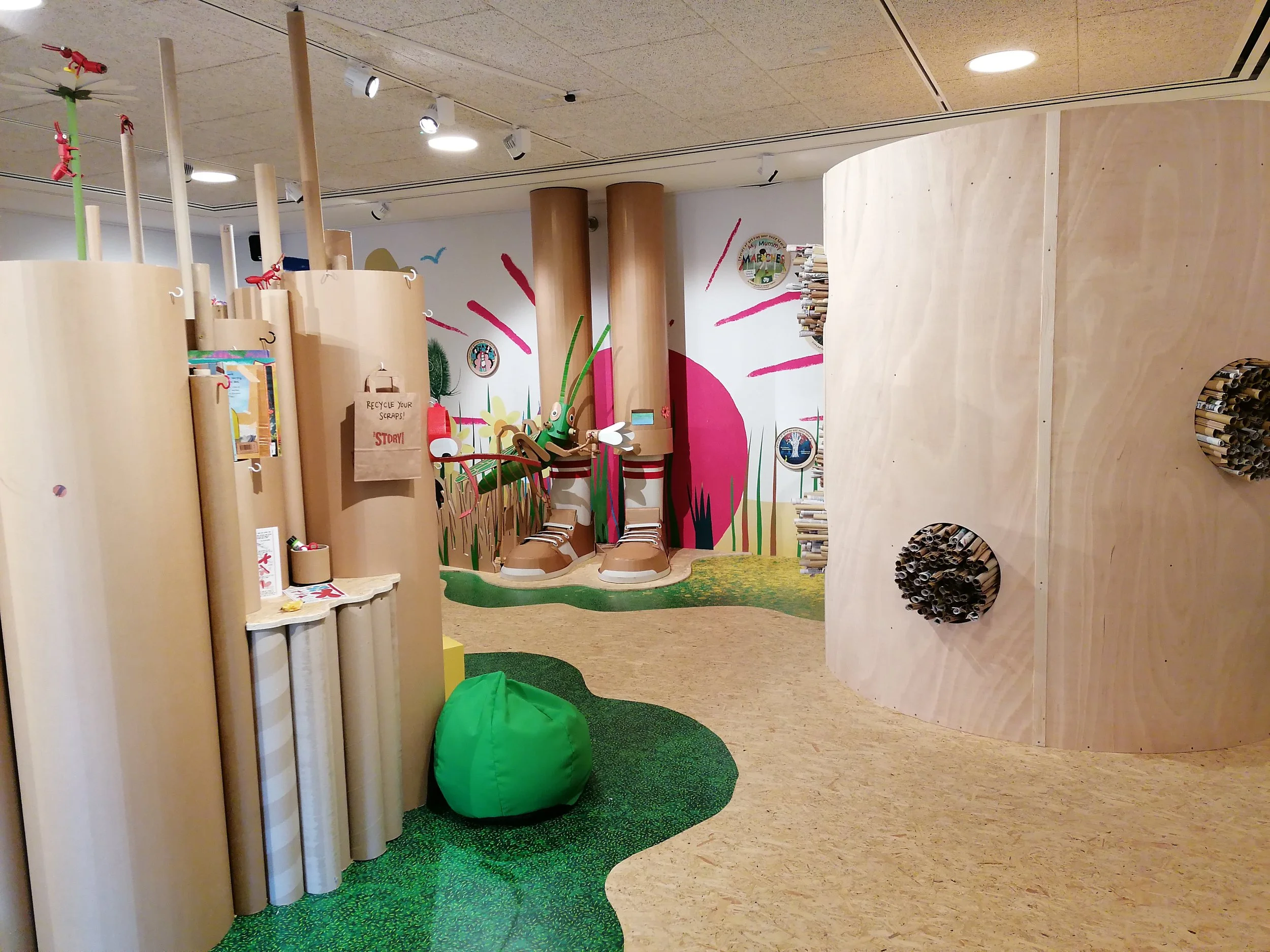


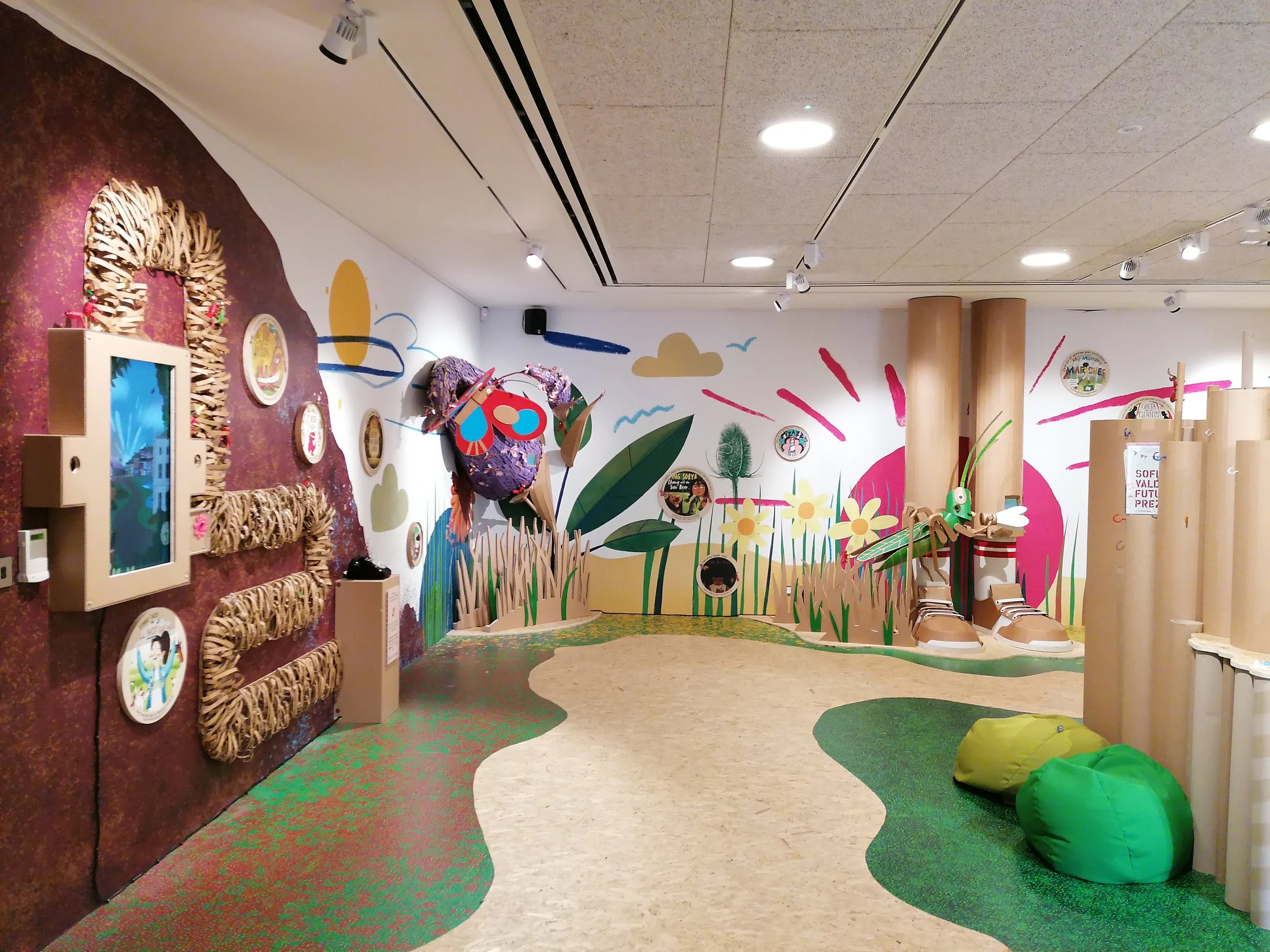
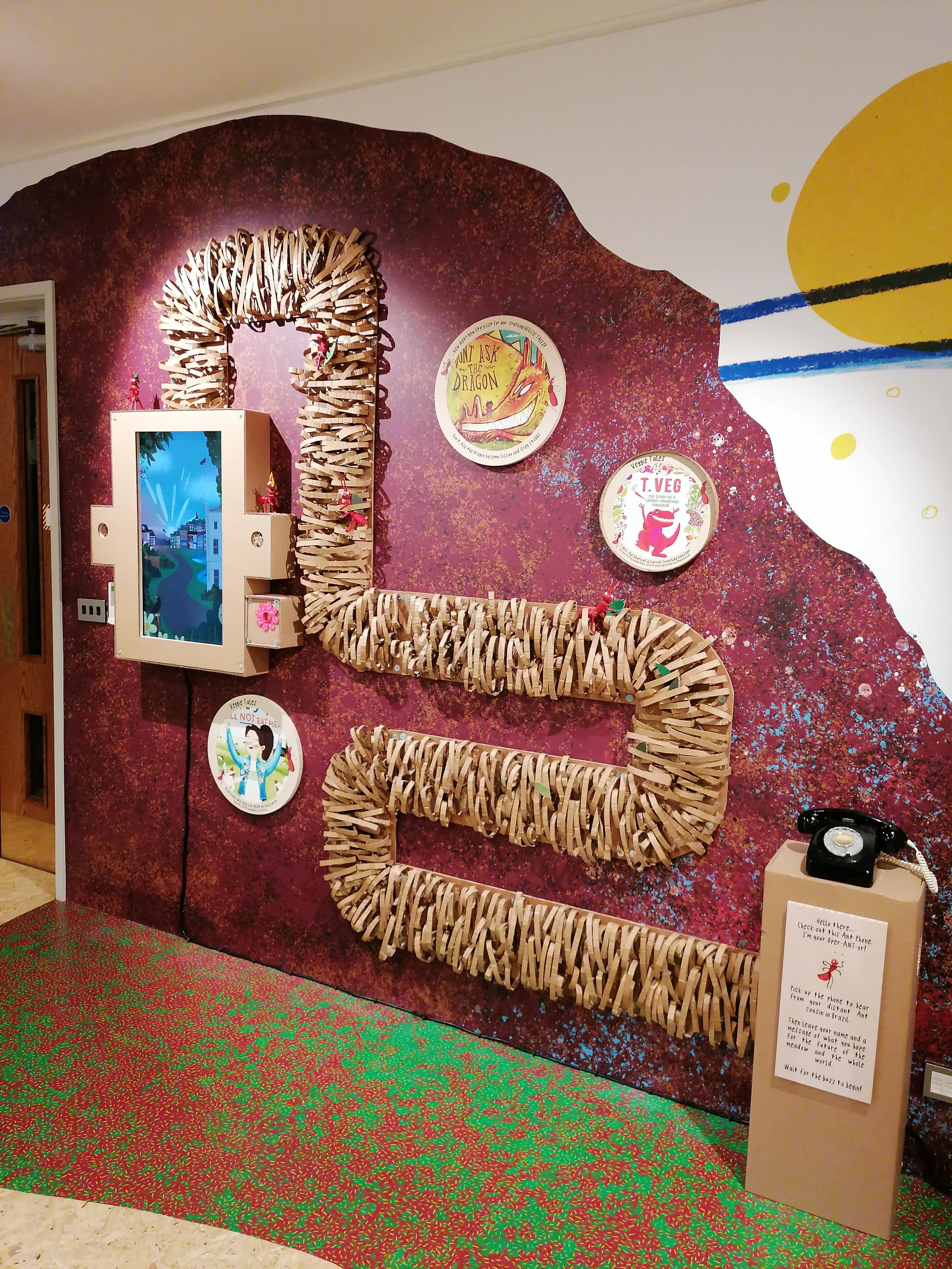
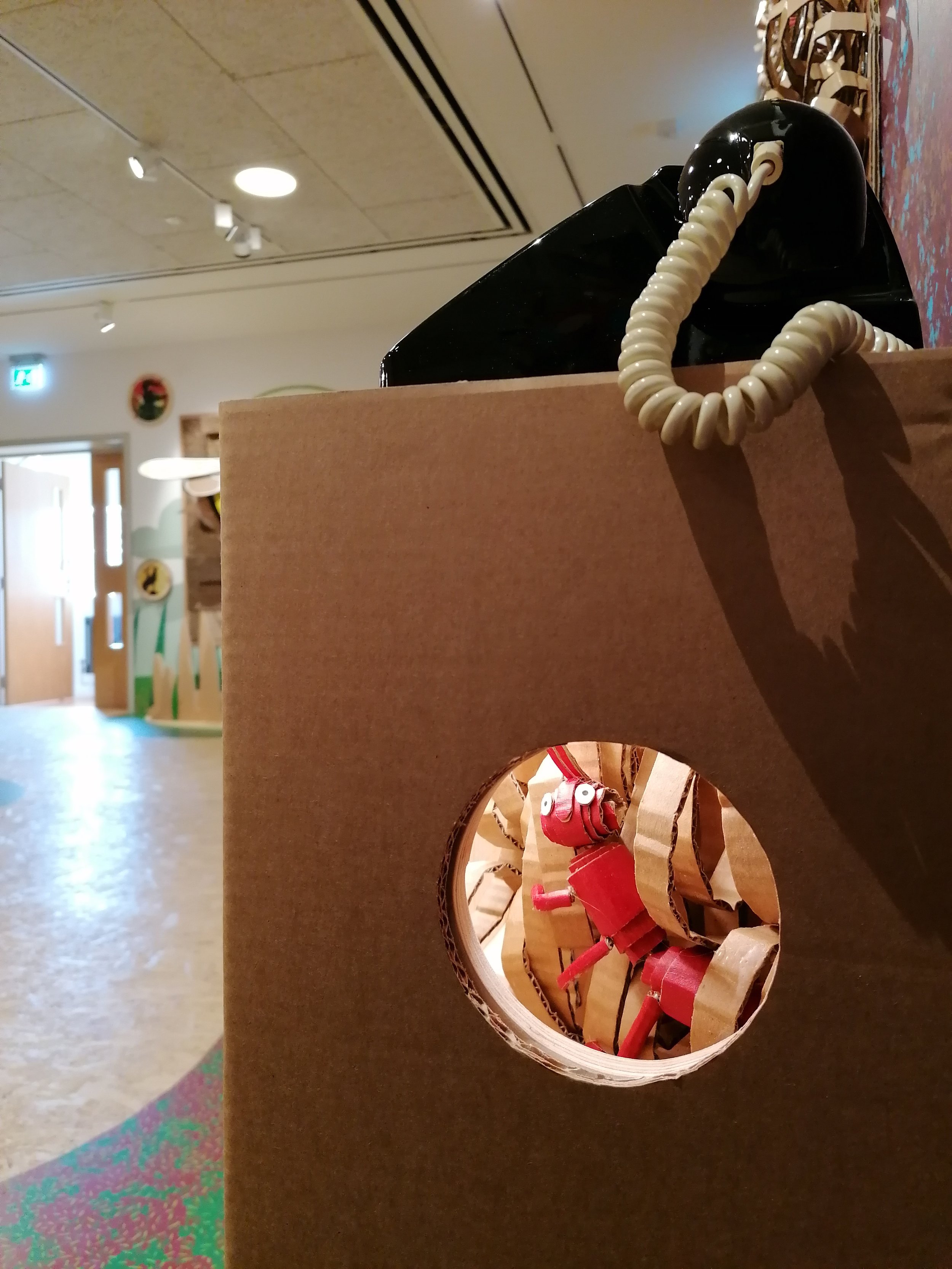
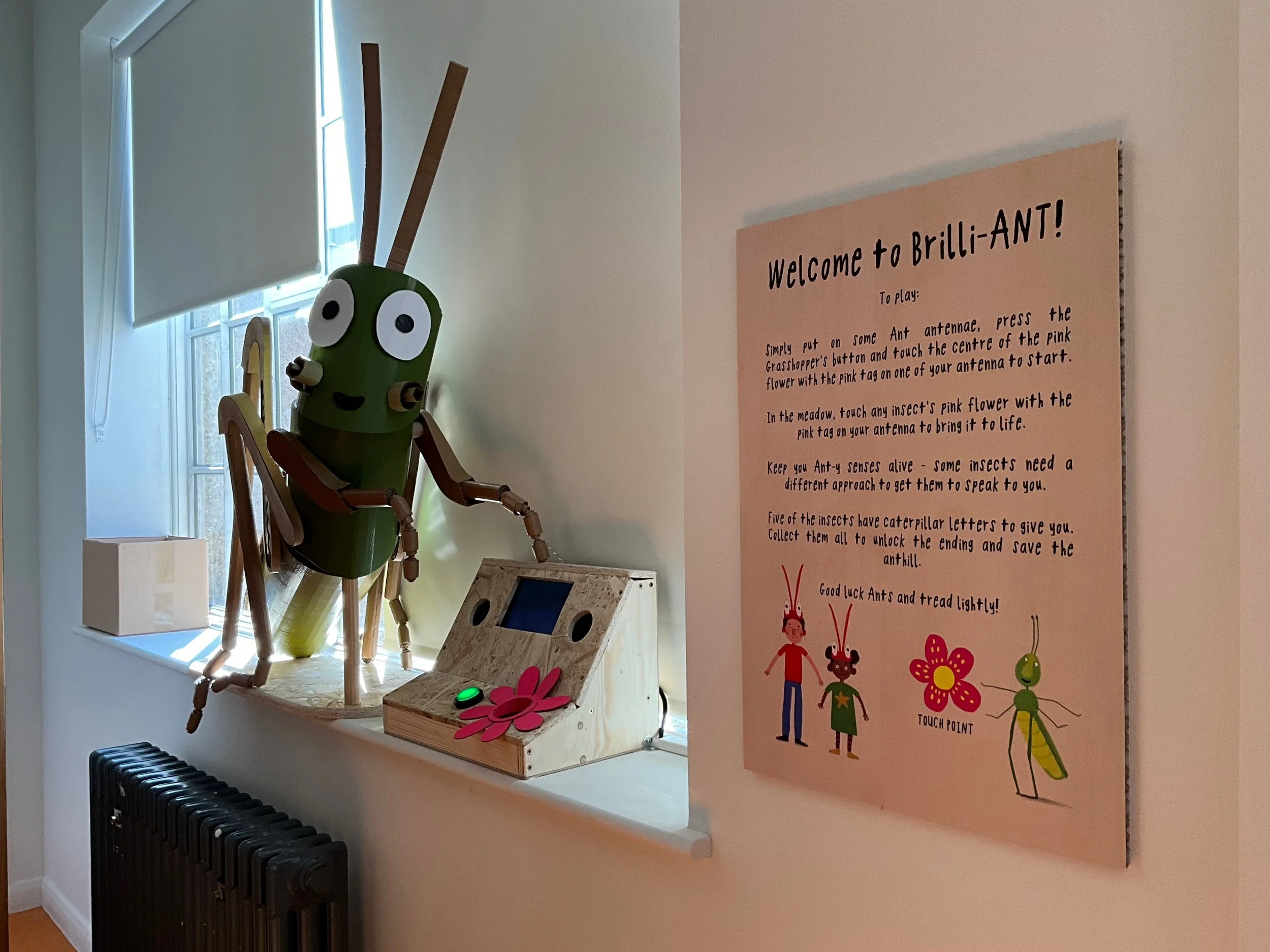
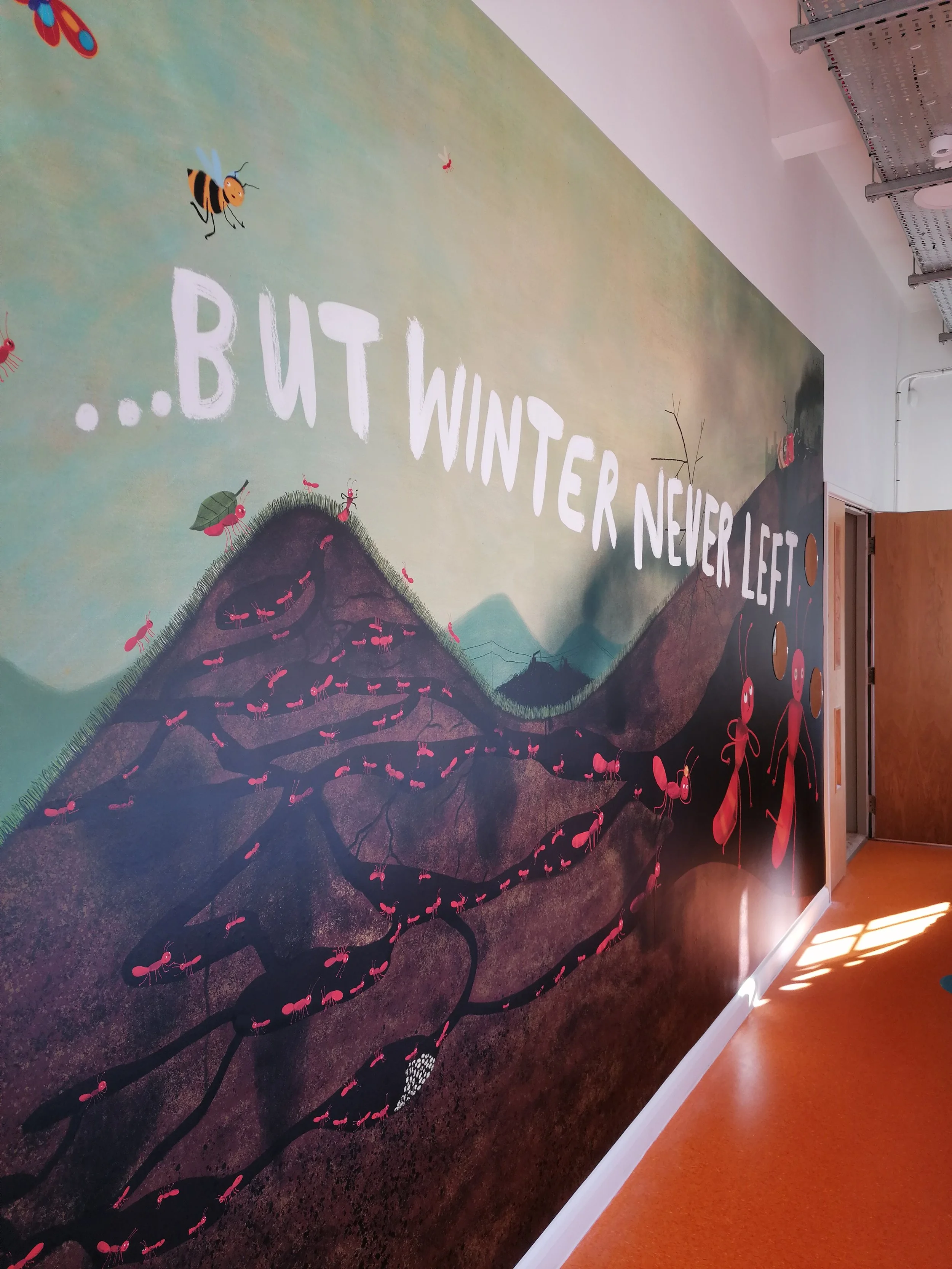
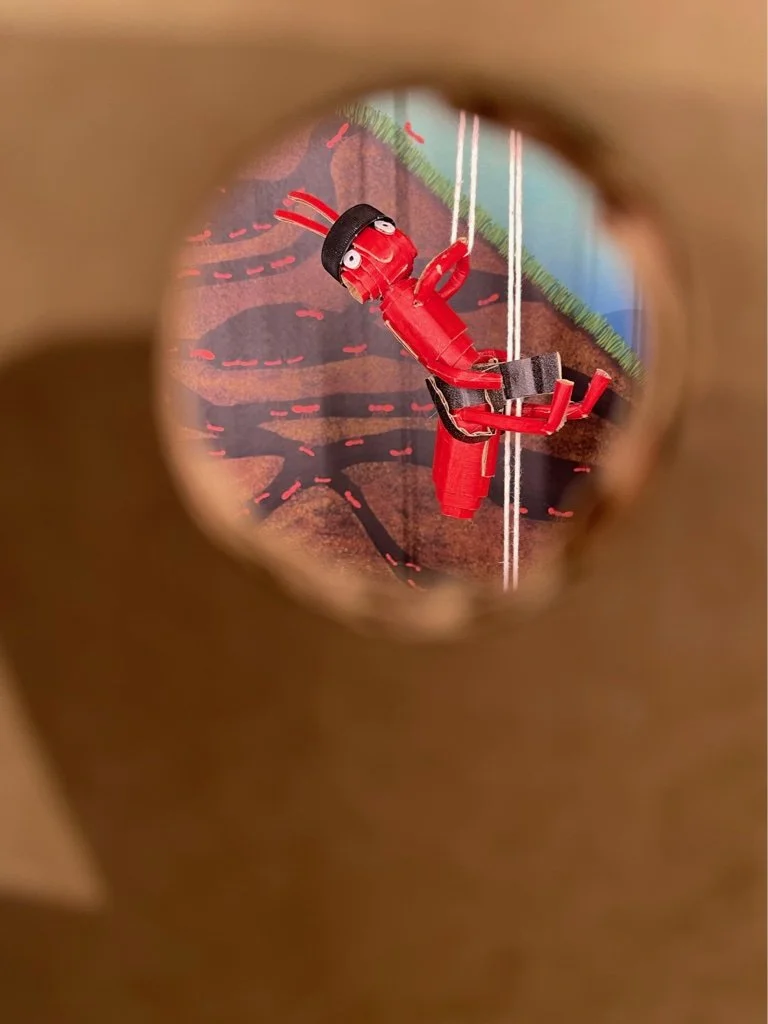
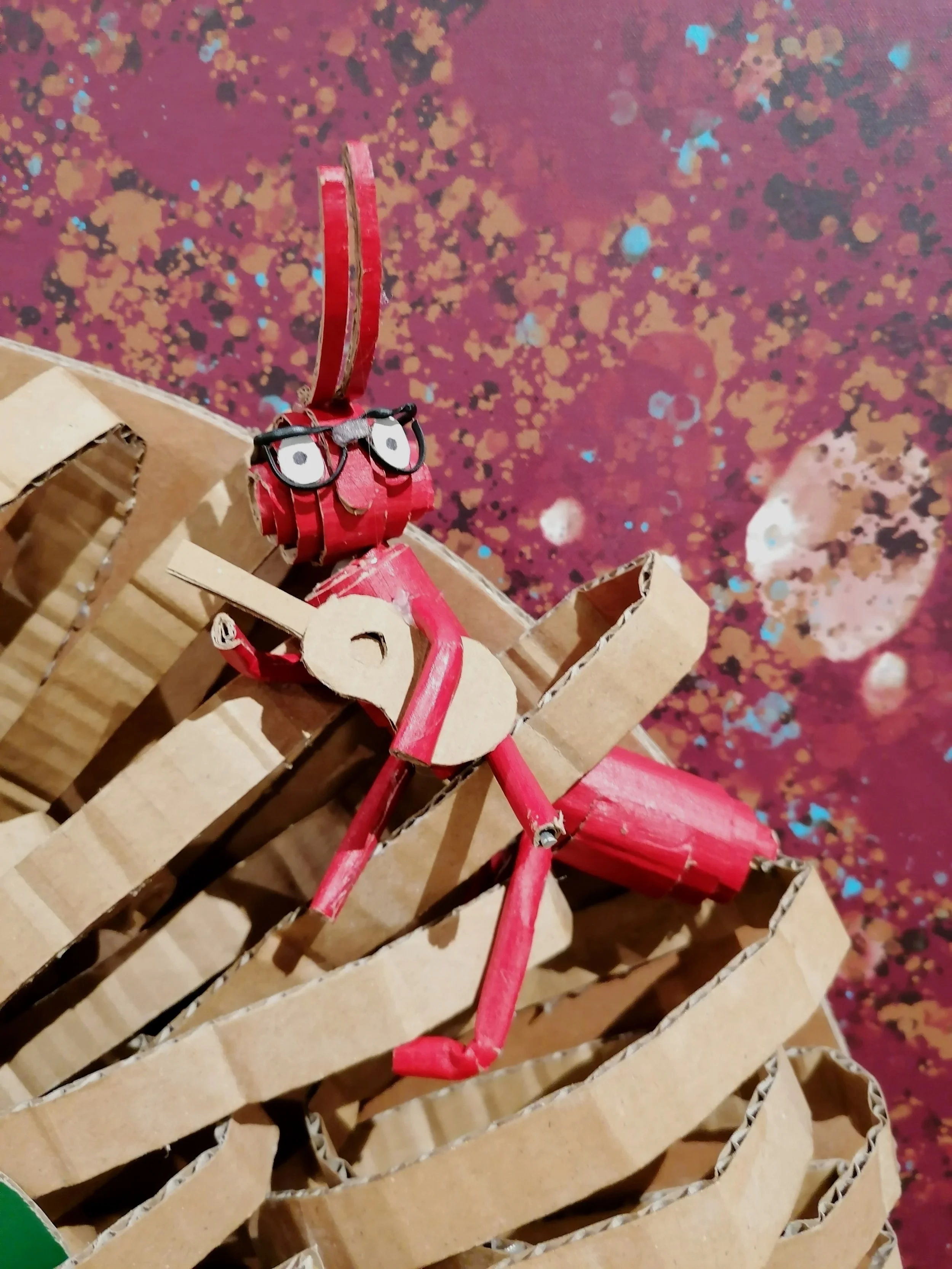
This project was absolute treat to be a part of. I was approached very early, as they were beginning to develop what the exhibition could be, working with climate experts and story tellers to decide on the story so I got to be involved in discussions and developments from the very start. The faith in my ability to design make and deliver was unerring and the technical support to bring these big ideas to life, particularly from Nomi the lead technician at the story museum was endlessly generous.
The exhibition was up for just over a year and then dismantled in mid 2024 and stored for touring. The exhibit was reconfigured for a much larger space and installed in Hope Town Museum in Darlington for 3 months in early 2026. The museums group has since received further funding to exhibit the work in 2028.
You can find an interview with Daniel Marcus Clark, Creative Director at the museum who covers the project in more detail and more eloquently than I could manage here, the information in regards to Brilli-ant itself starts a a paragraph or 2 down.
Enjoy having a look through the images. The amount of different elements, details and easter eggs within the exhibit feels impossible to cover so I’ve included some details on a couple of sections below but by no means all. The many many wee ants (even the ones not feature here) thank you for your attention and patience if you clicked through the above gallery and actually got back to the start!
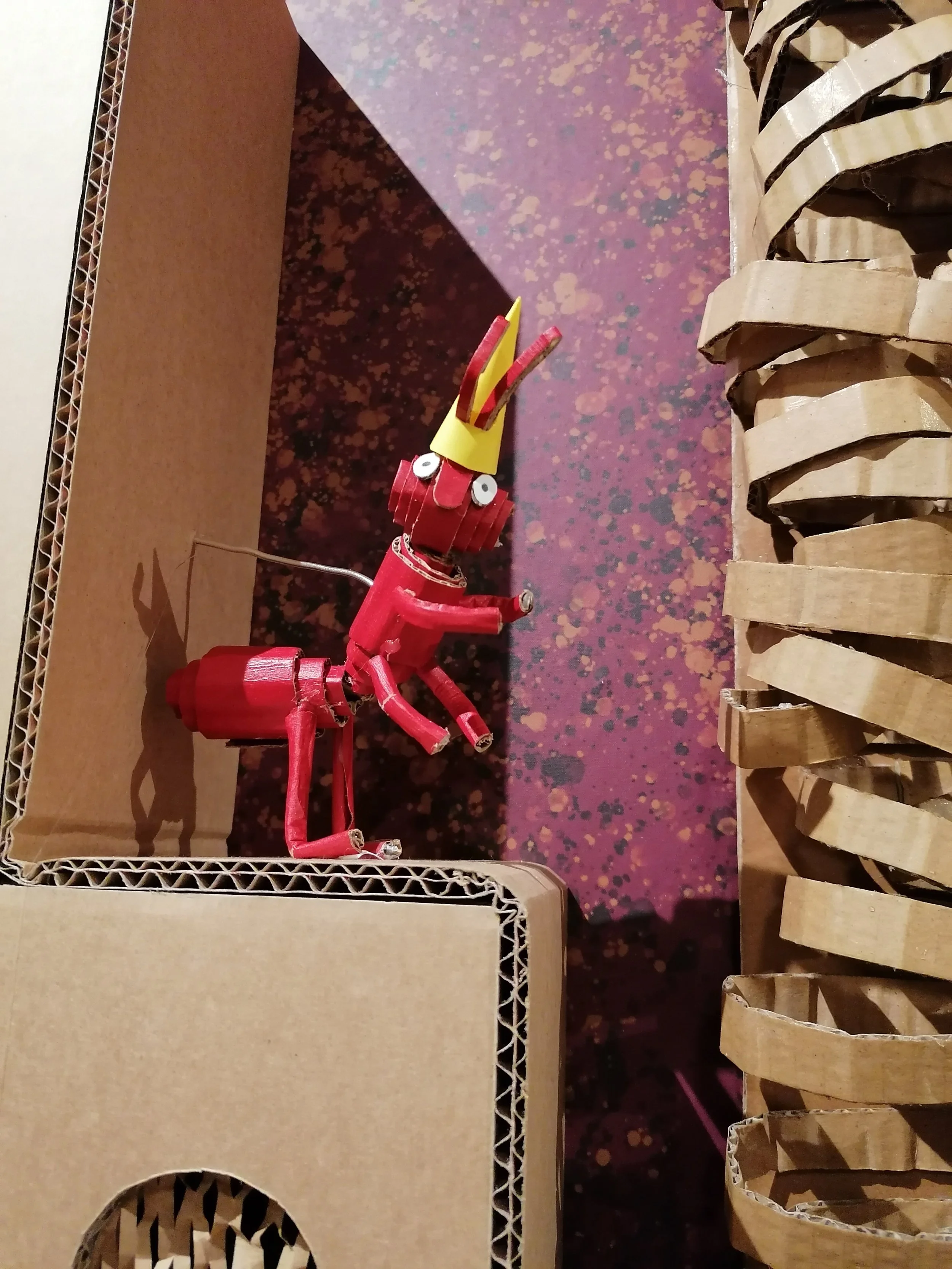
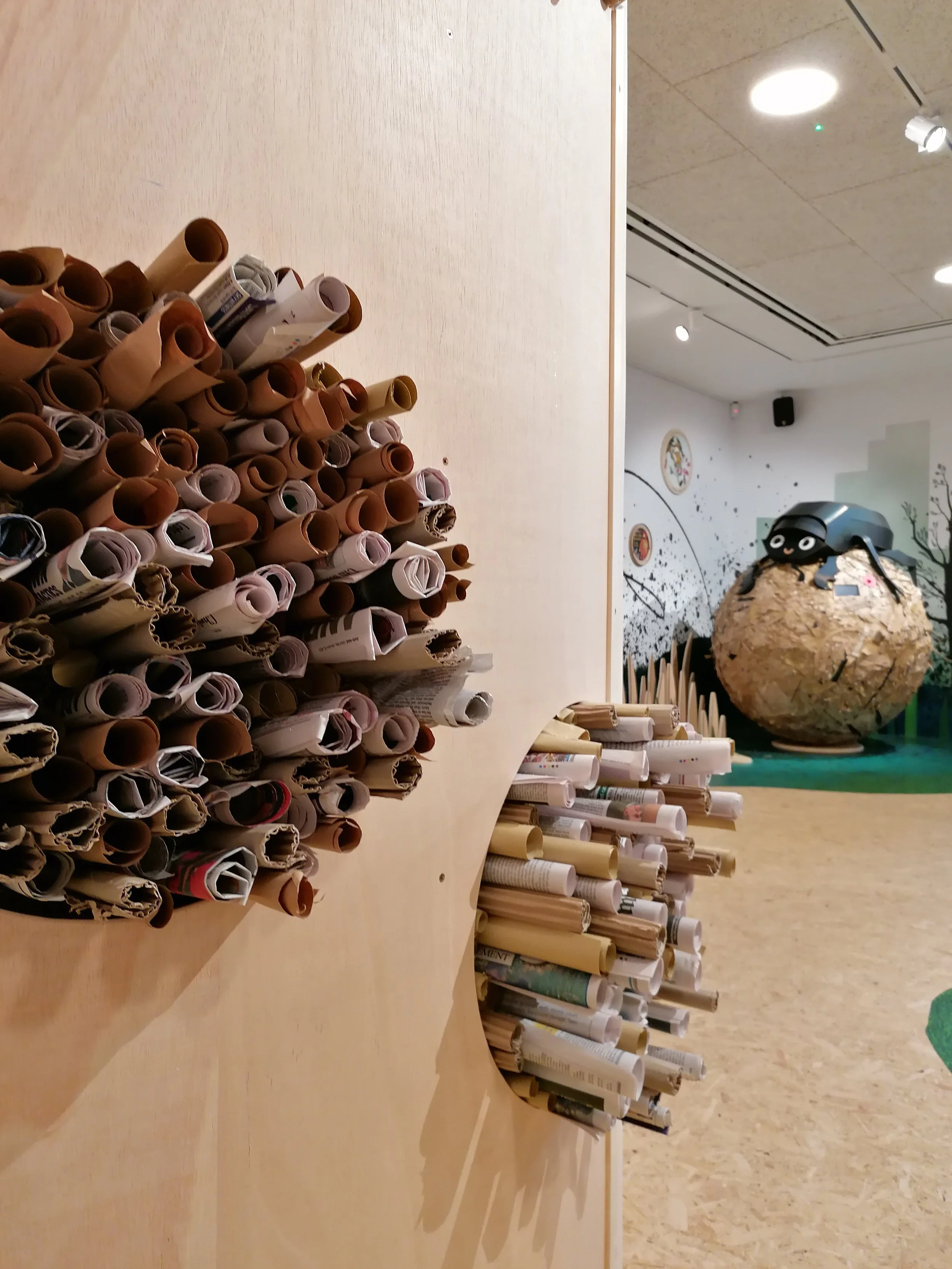
Dung Beetle
Voiced by Sir Derek Jacobi and covering the topic of reuse and recycling.
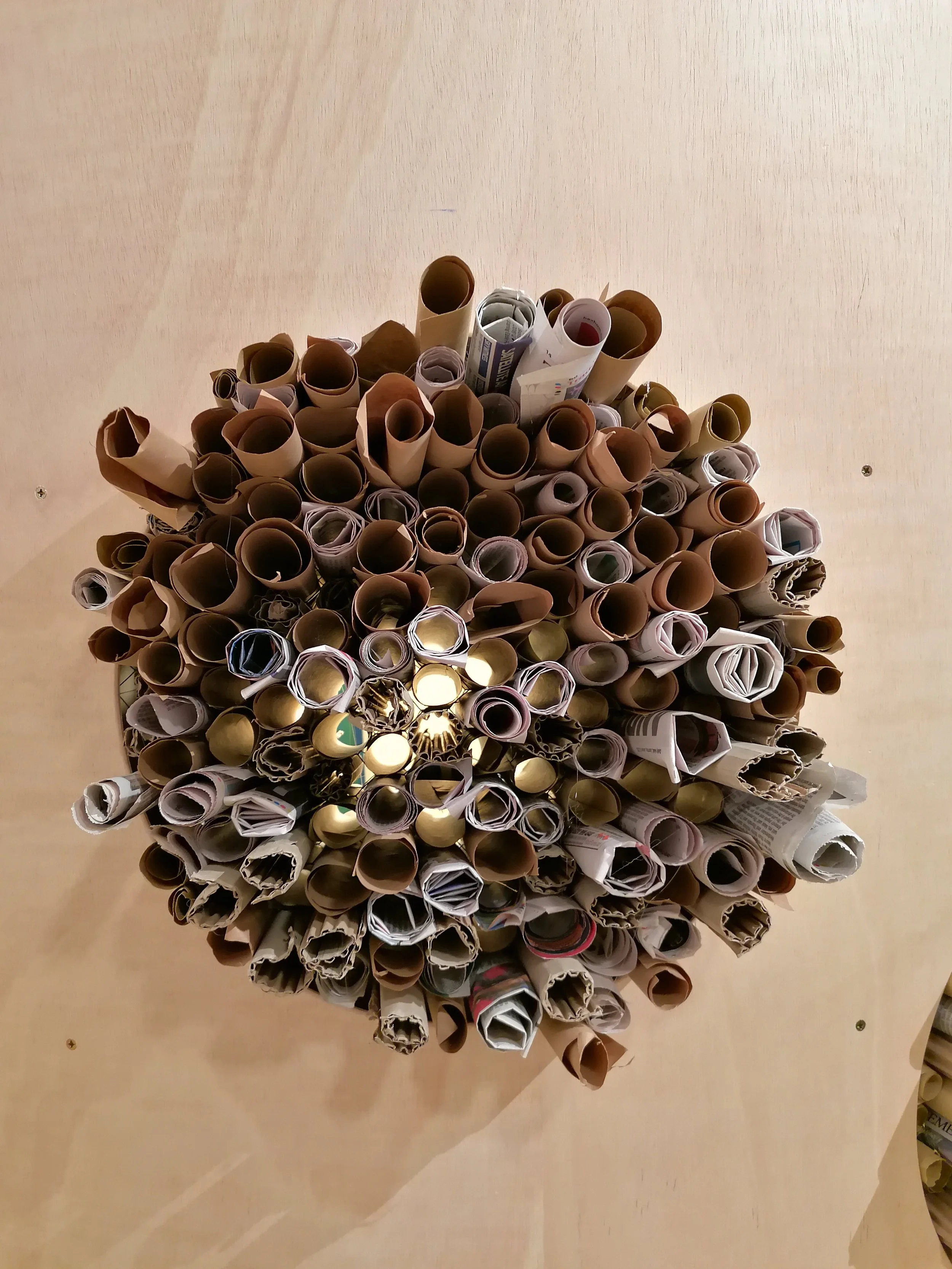
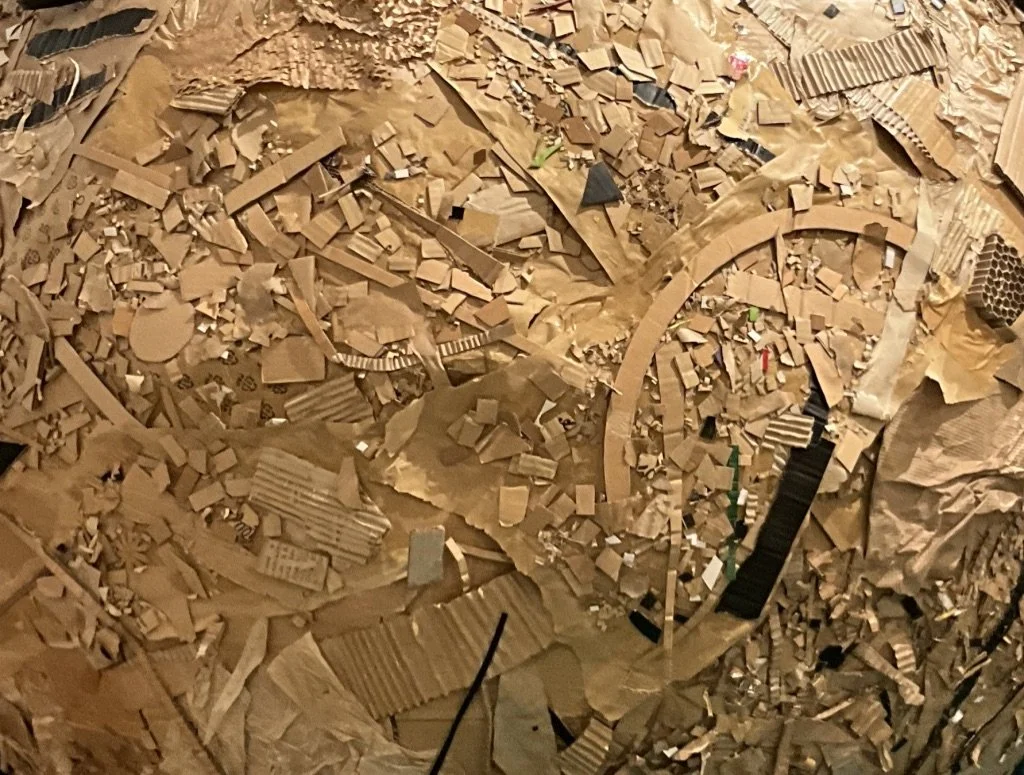
The texture of the dung ball was made up of all the offcuts and tiny scraps accumulated on my studio floor throughout the months fabricating the exhibit.
Did you know small pieces in paper recycling don’t always get recycled? It all depends on the sorting methods used in your area, it felt good to be able to mitigate this possibility for this exhibit.
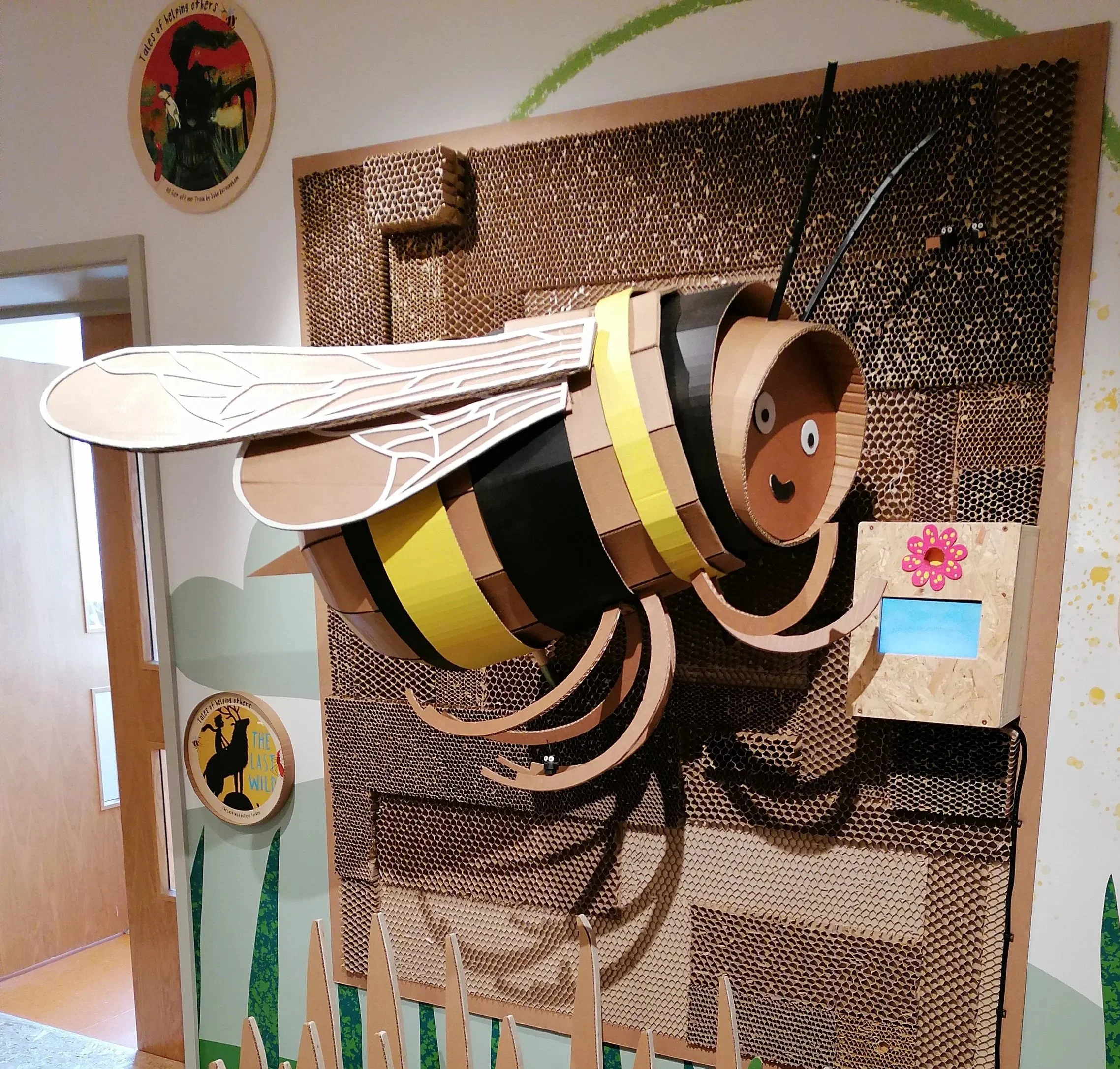
Bo Bumble
Voiced by author Bernadette Russell covering the importance of helping others.
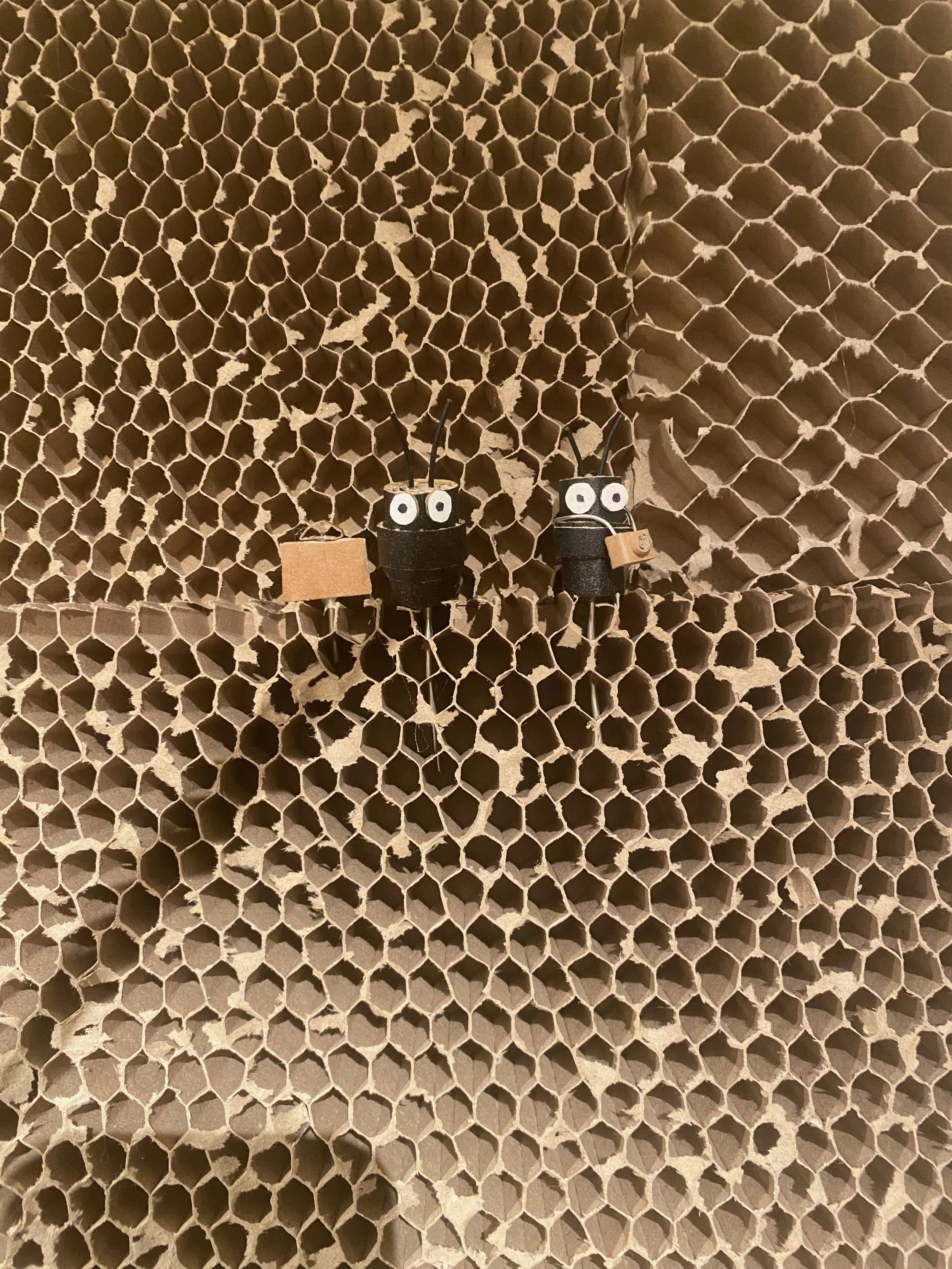
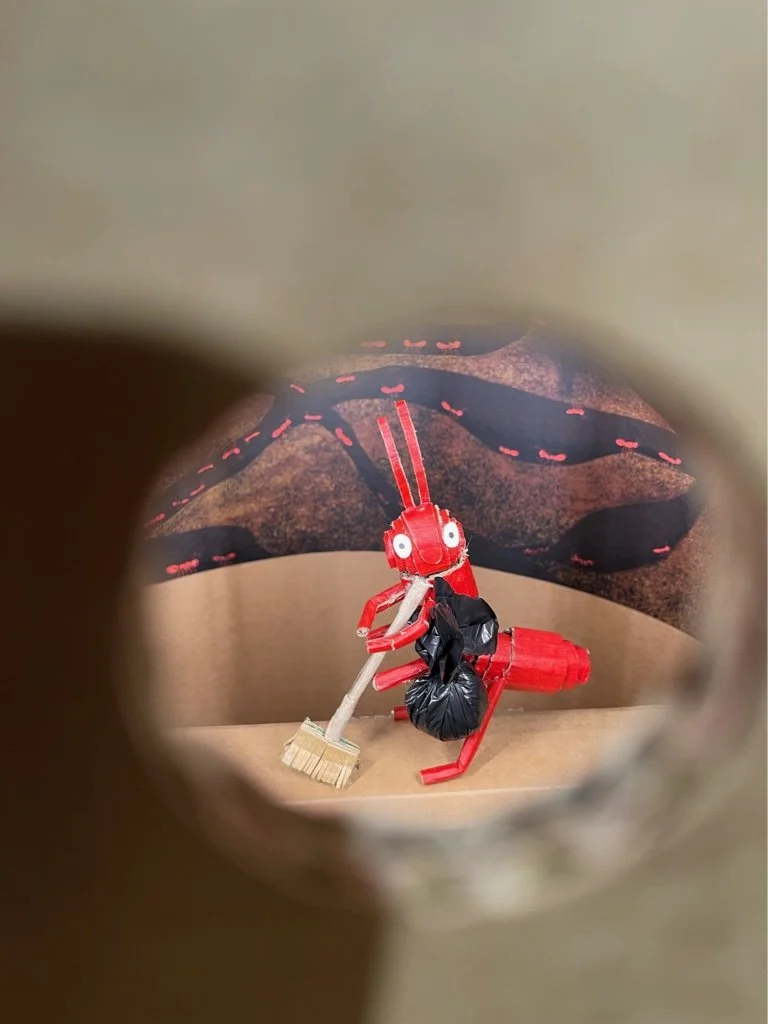
Did you know phoretic mites hitchhike on bumblebees? They use the bees for transport but cause no harm to the bee in the process
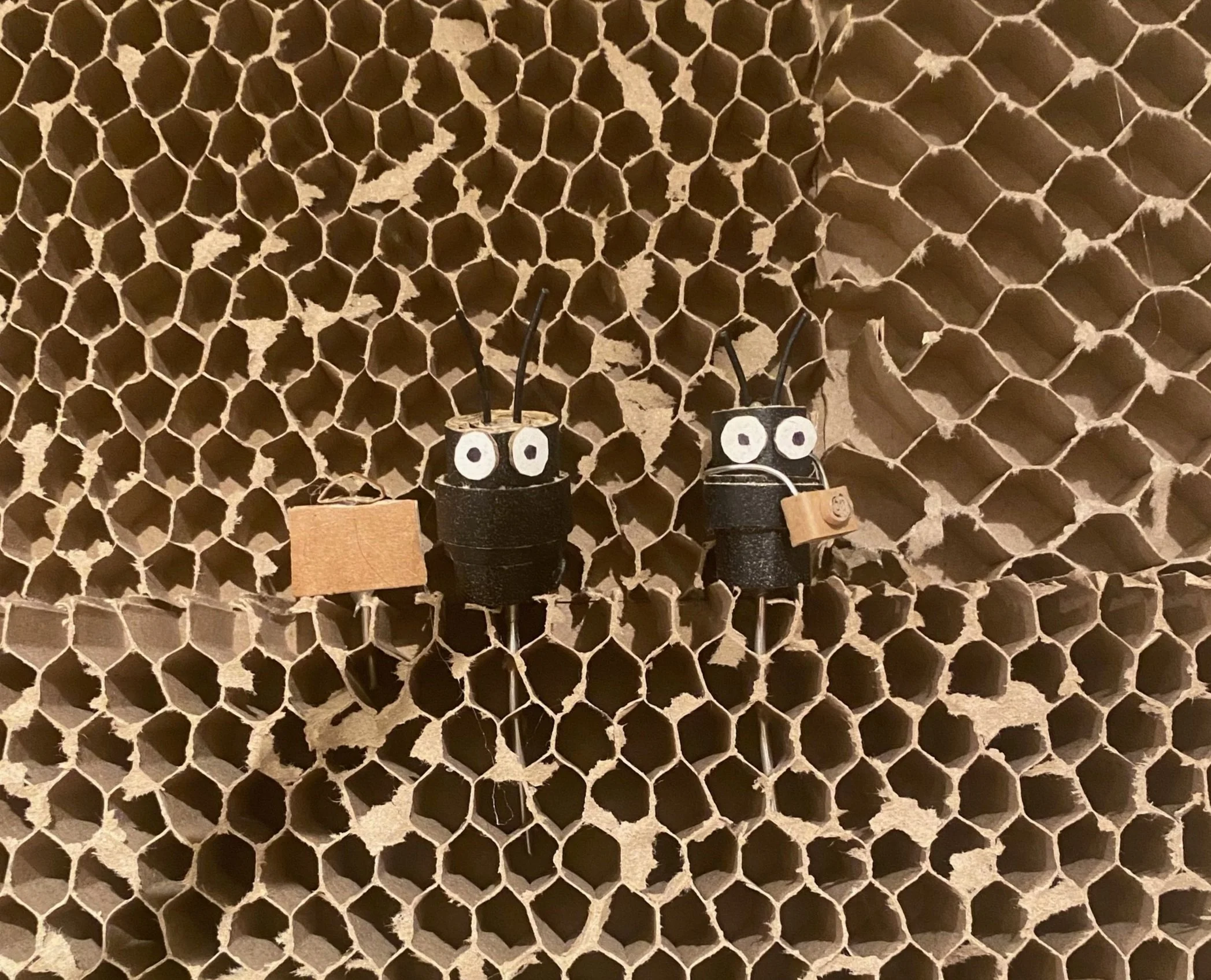
The background was made of collected honeycomb packing materials used to fill space in deliveries. I’d been collecting them over several years for a something, turned out this was that something.
Hidden within the honeycomb were 2 tiny mites waiting to set off on their holidays with their suitcase and camera.
Super Worm
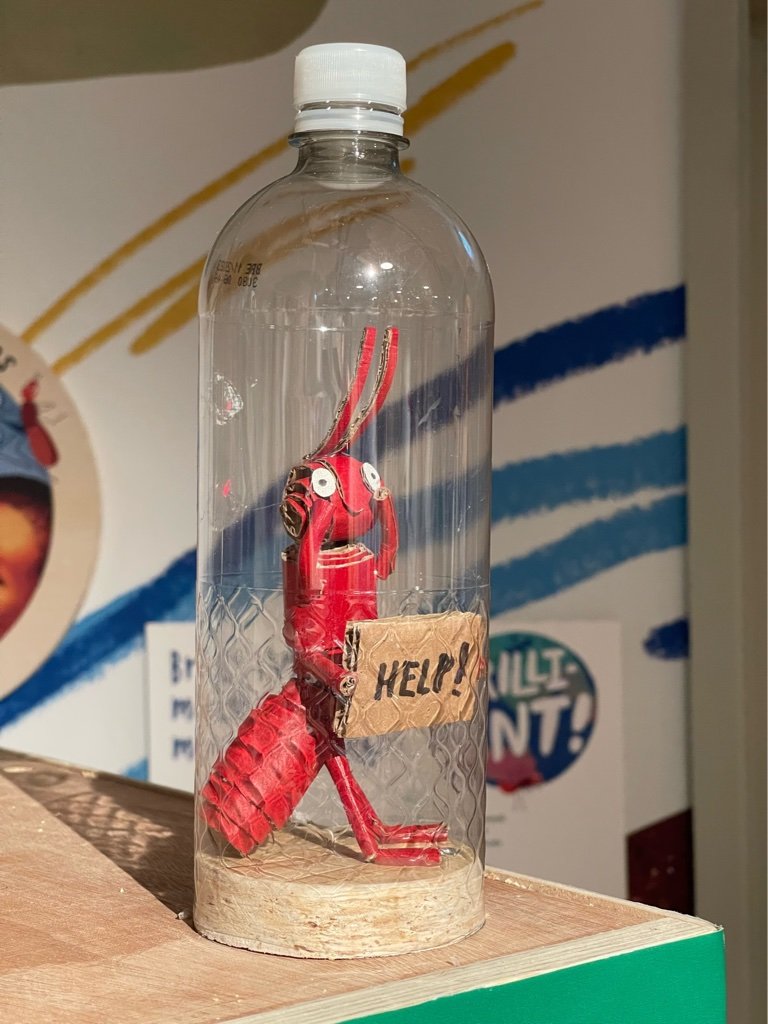
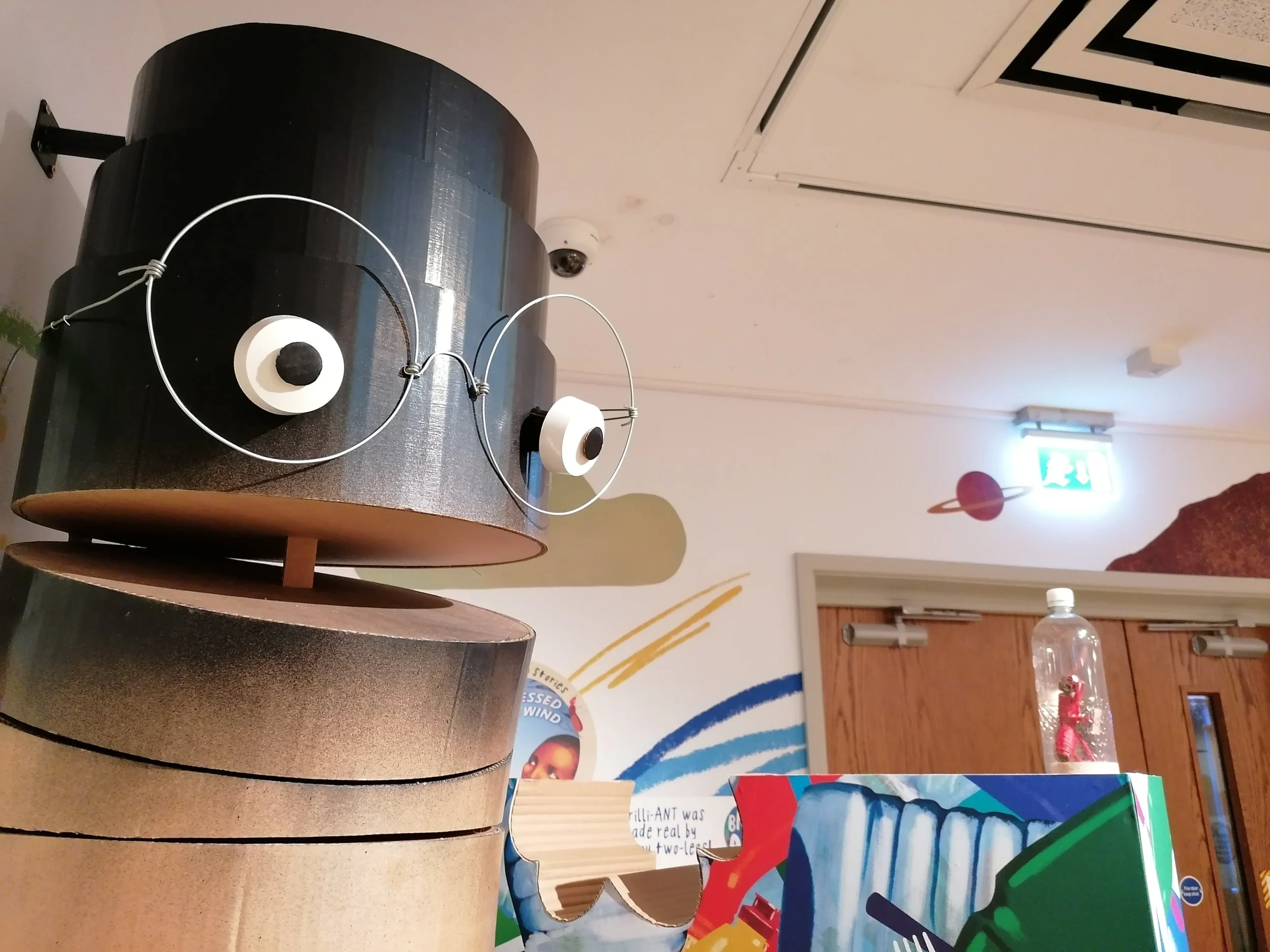
Voiced by Julian Clary touching on the effects of plastic pollution
Super Worms inclusion was inspired by a recent discovery of the Zophobas morio, commonly known as a superworm which can survive on a diet of polystyrene! The beetle larvae digest the plastic through a gut enzyme. Scientists hope to identify which enzyme is the most effective so it can be reproduced at scale for recycling.
Did you know plastics such as polystyrenes take 500years+ to biodegrade?
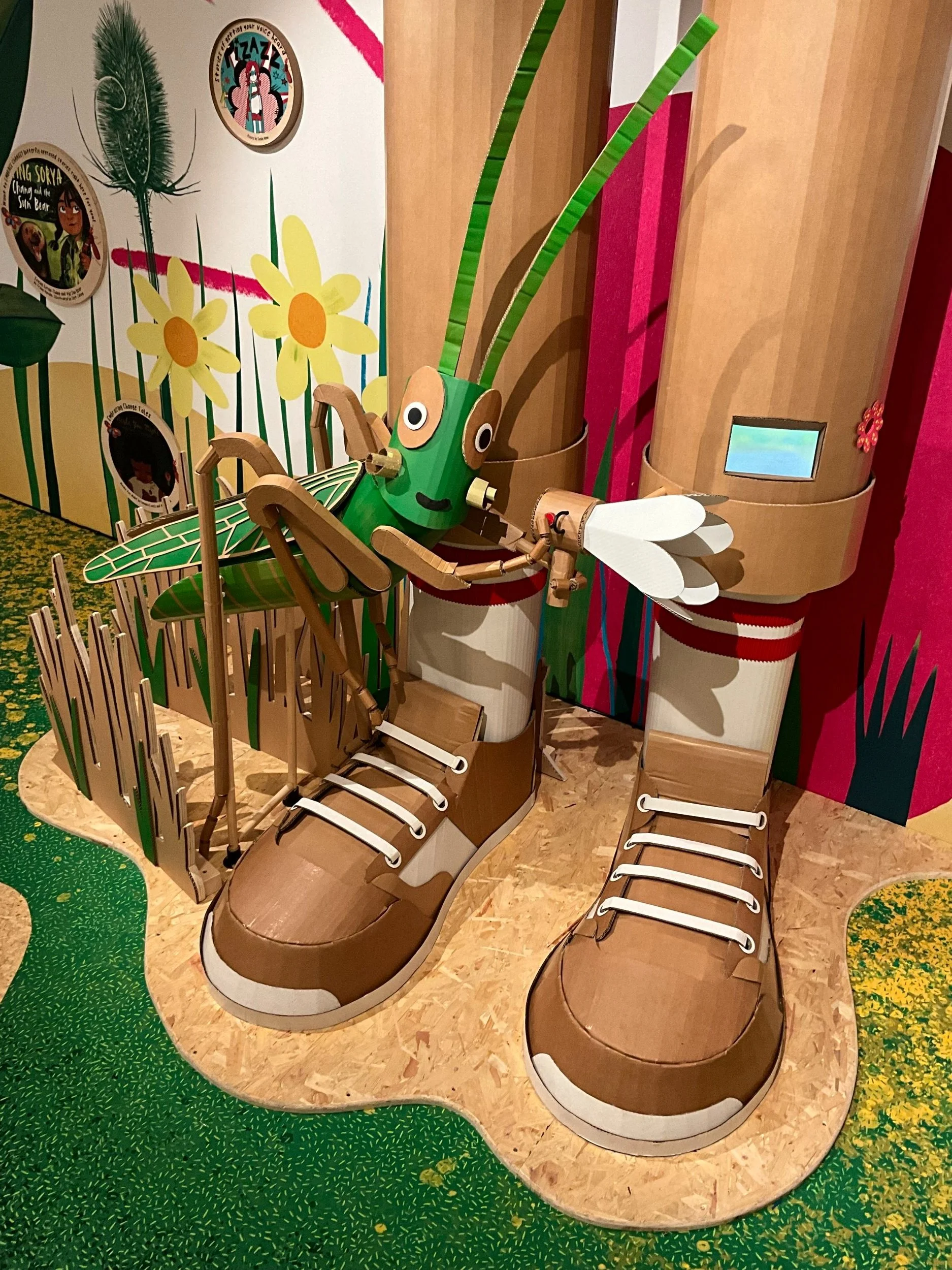
Quinn Crick
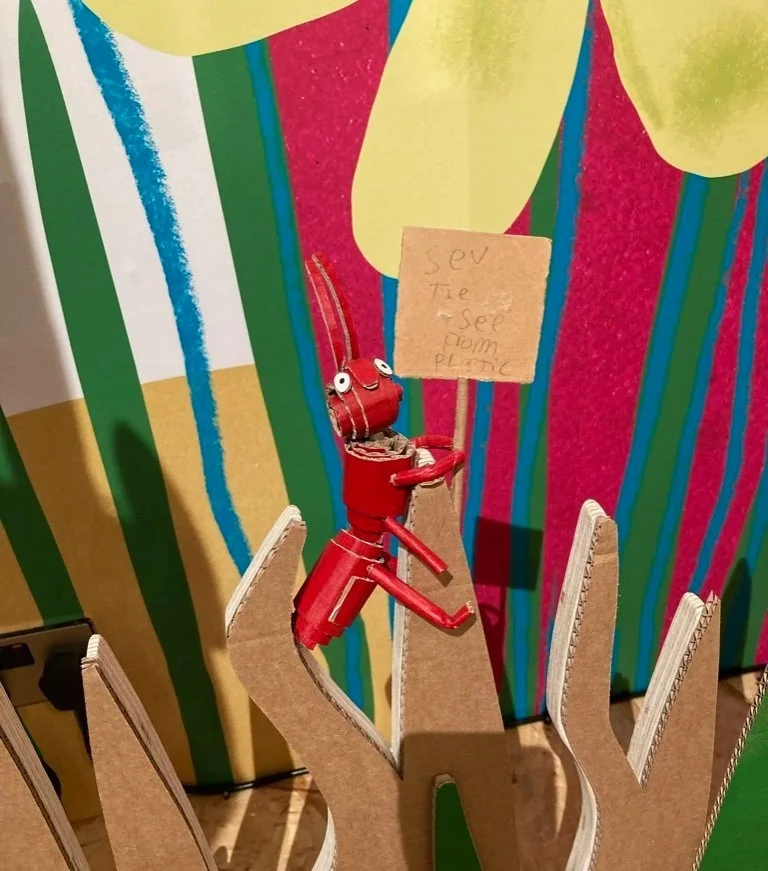
Voiced by climate activist Noga Levy-Rapoport covering the topic of protest.
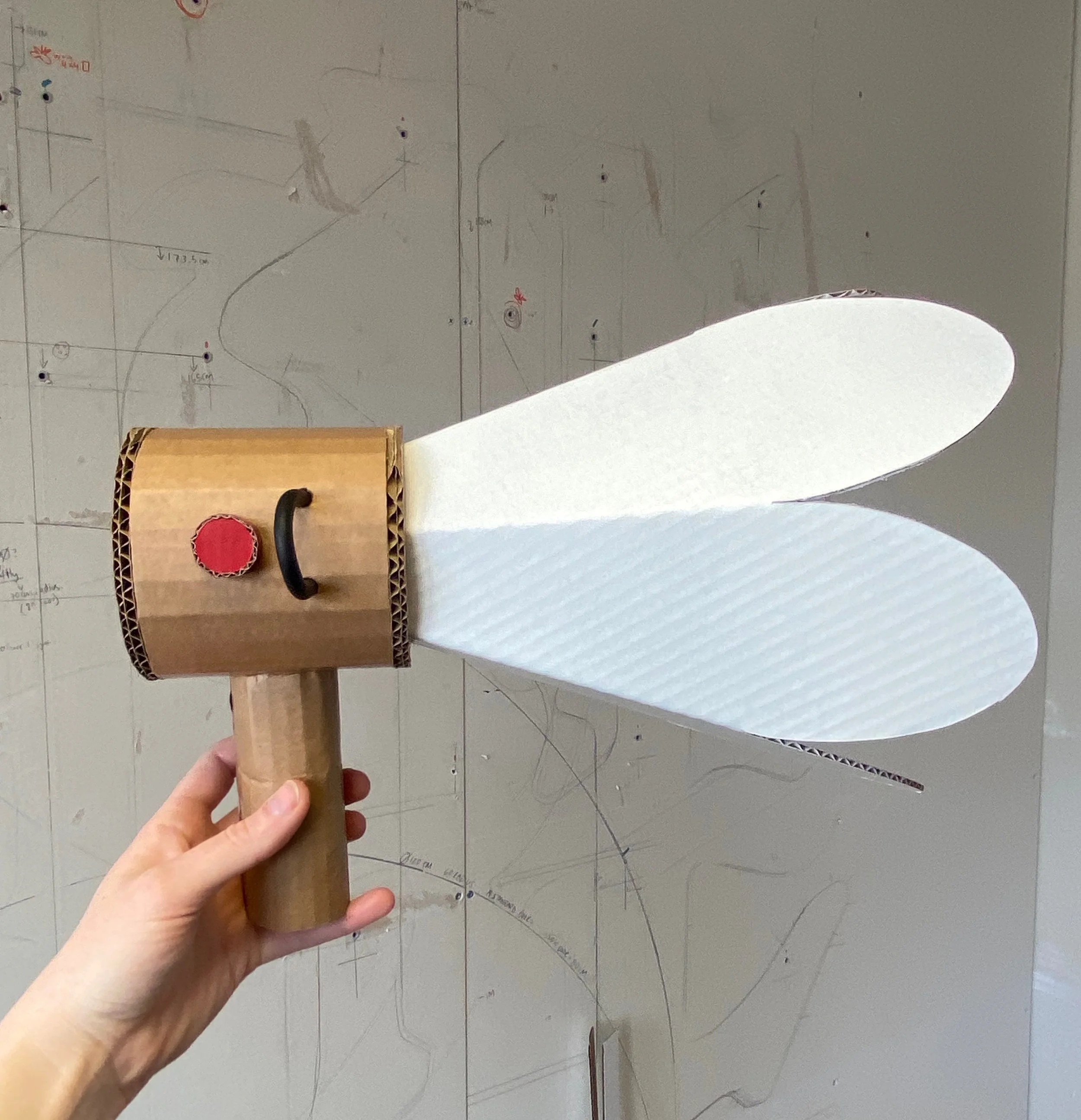
This section was all about making your voice heard and the ability to make change regardless of size. I gave Crick a loudhailer made of a flower.
Did you know that crickets antennae are much longer than those of the grasshopper? That’s the easiest means to distinguish between the two for the layman. I made sure this fact could be noticed between the two insect sculptures in the exhibit, not sure if anyone did!
Glow Worm
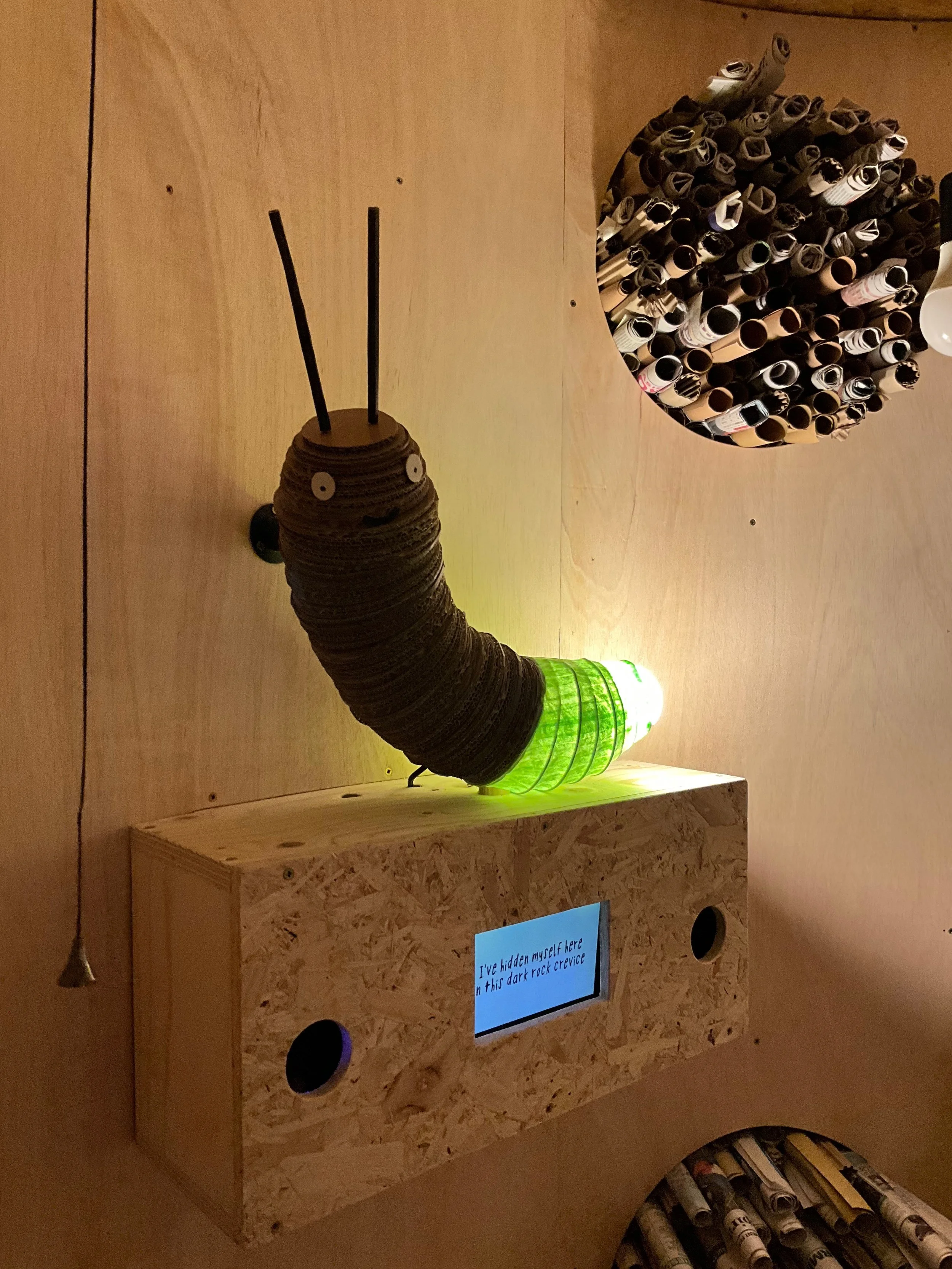
Voiced by Elis James Speaking to the topic of habitat destruction.
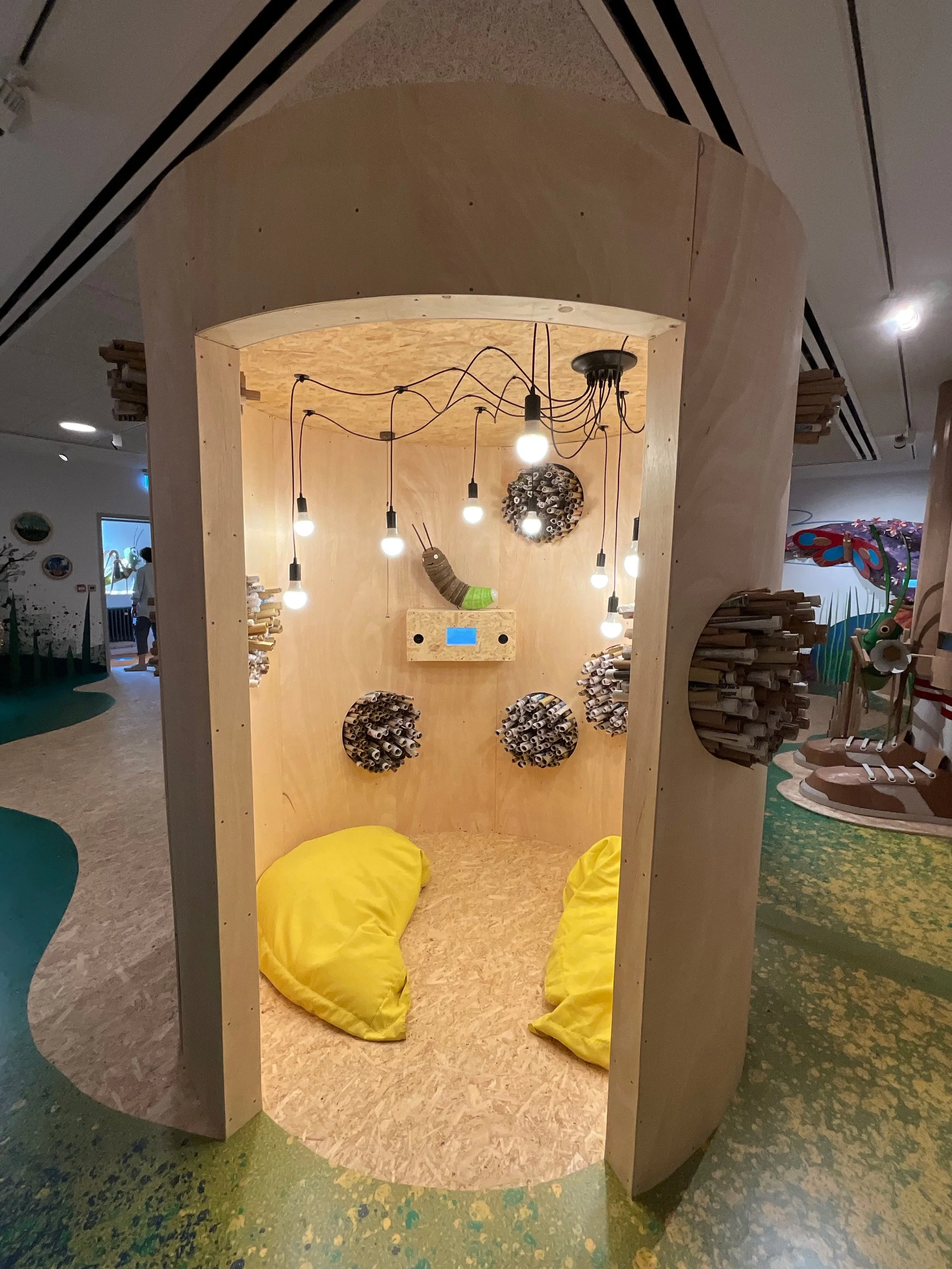
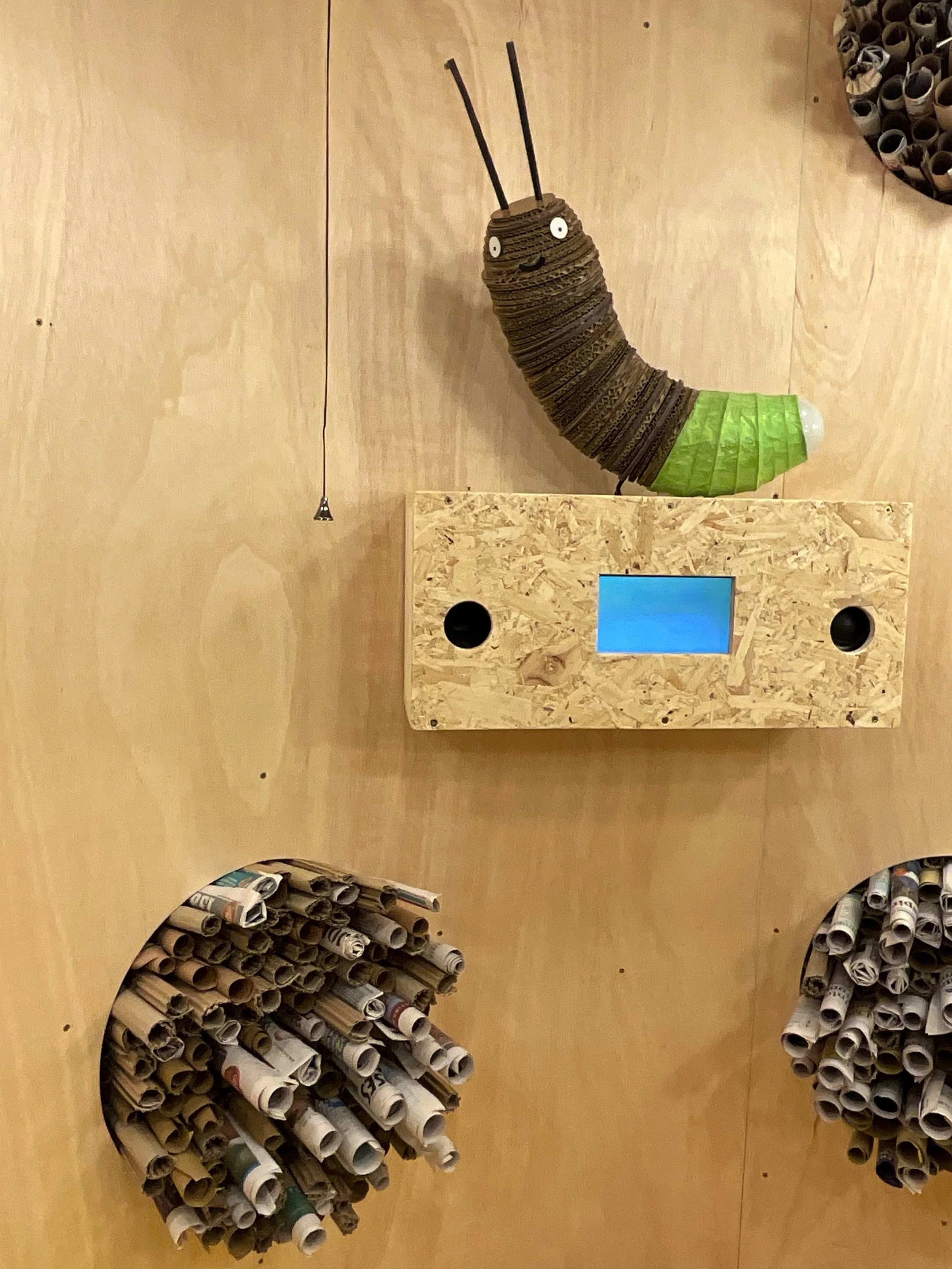
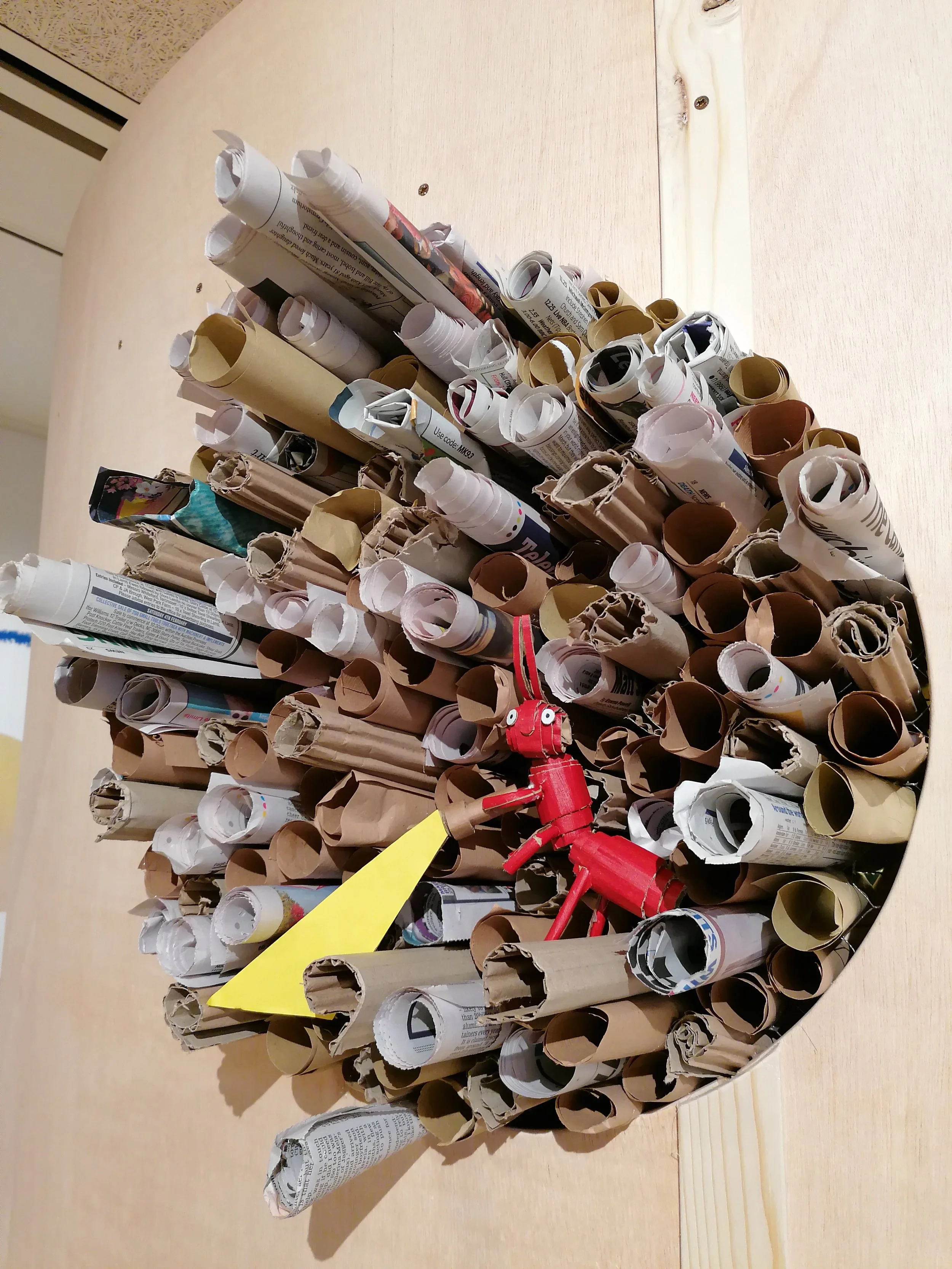
Upon entering the enclosed structure visitors would pull a light cord turning on all the bulbs to light the space and triggering the glowworms story about the difficulties caused by light pollution. When the main lights in the space went off the worm would begin to glow again.
The structure made use of hundred of old newspapers.